
Almost part of the furniture: Rus and Shannon’s story
Two young men found their place volunteering at the Clothing Barn in Whangārei – and, in each other, a friend. This is Rus and Shannon's story.
On a Wednesday morning at the back of the CCS Disability Action Whangārei property, two young men are already at work. At The Clothing Sheds and Book Barn (known locally as The Clothing Barn), donated clothes are waiting to be sorted. Ruslan (Rus) and Shannon arrive a little after eight, and the place feels more like itself once they are in it.
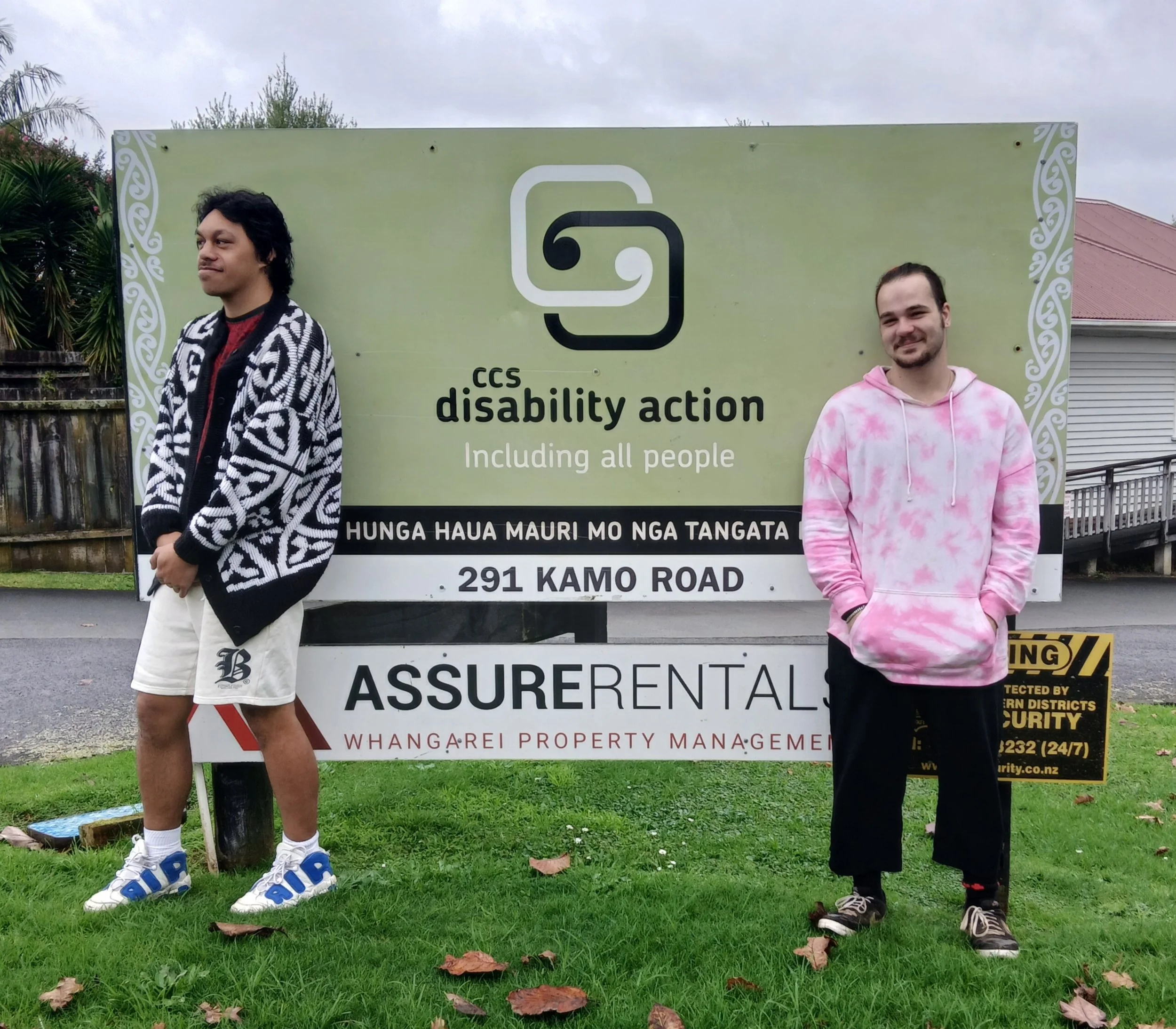
Shannon and Rus at CCS Disability Action Whangarei.
Their work here is voluntary, and they take it seriously. The pair also help at the CCS Disability Action office: watering the plants, sweeping the paths, keeping the place tidy. Down at the Clothing Barn, they sort and organise the donated stock ready to be gifted to those in need in the community. They are, as their Coordinator Jo Matthews-Rudolph puts it, almost part of the furniture now.
Neither of them was here a year ago. They arrived separately, referred to CCS Disability Action within months of each other. Each wanted much the same thing: a way into the world. What they did not expect was to find it together.
Rus is 24 and lives in his own flat. He is open about the life he had before meeting the team at CCS Disability Action. For a long time he was, in his words, a bit of a gamer, and not much else.
"When I was gaming, I used to be quite antisocial," he says. "I didn't get enough sun. My sleeping patterns were completely out of whack."
After school he went through a stretch of poor health and had few connections. Getting back into the workforce had been a long, challenging road. He had wanted, for years, to simply get out and be sociable.
That is where Jo came in. She is Coordinator for both young men. The goal of CCS Disability Action's support is the same for each: to clear away the barriers in the way of the life they want to lead.
"Jo, in particular, has helped me find my footing," Rus says. "She introduced me to volunteering at the Clothing Barn. Just to help me get stronger community connections and get myself out of the house."
Her encouragement has made an impact. "Since I started going, I've become more lively, more happy," he says. He pauses, then puts it more plainly. "I feel more human."
Volunteering at the Clothing Barn gave Rus something to turn up for, and the people there noticed his potential. Through one of the managers, he found paid work at Plantpro, a landscaping business connected to one of the managers of the shop. He has been there around six months now, working Tuesdays and easing his way back into the workforce.
"Now I've got community through the voluntary work, and then I've got paid work too. That's basically what I've always wanted. Just to get out of the house and be with people."
He has noticed the change in himself, and so have others. "I've been told I've become more of a leader, or a role model," he says.
Jo has kept working alongside him on the practical things: his CV, and next, working towards his driver's licence.
Rus has also taken part in an interview about self-advocacy to support CCS Disability Action training. It is part of learning to speak up for himself and what he wants.
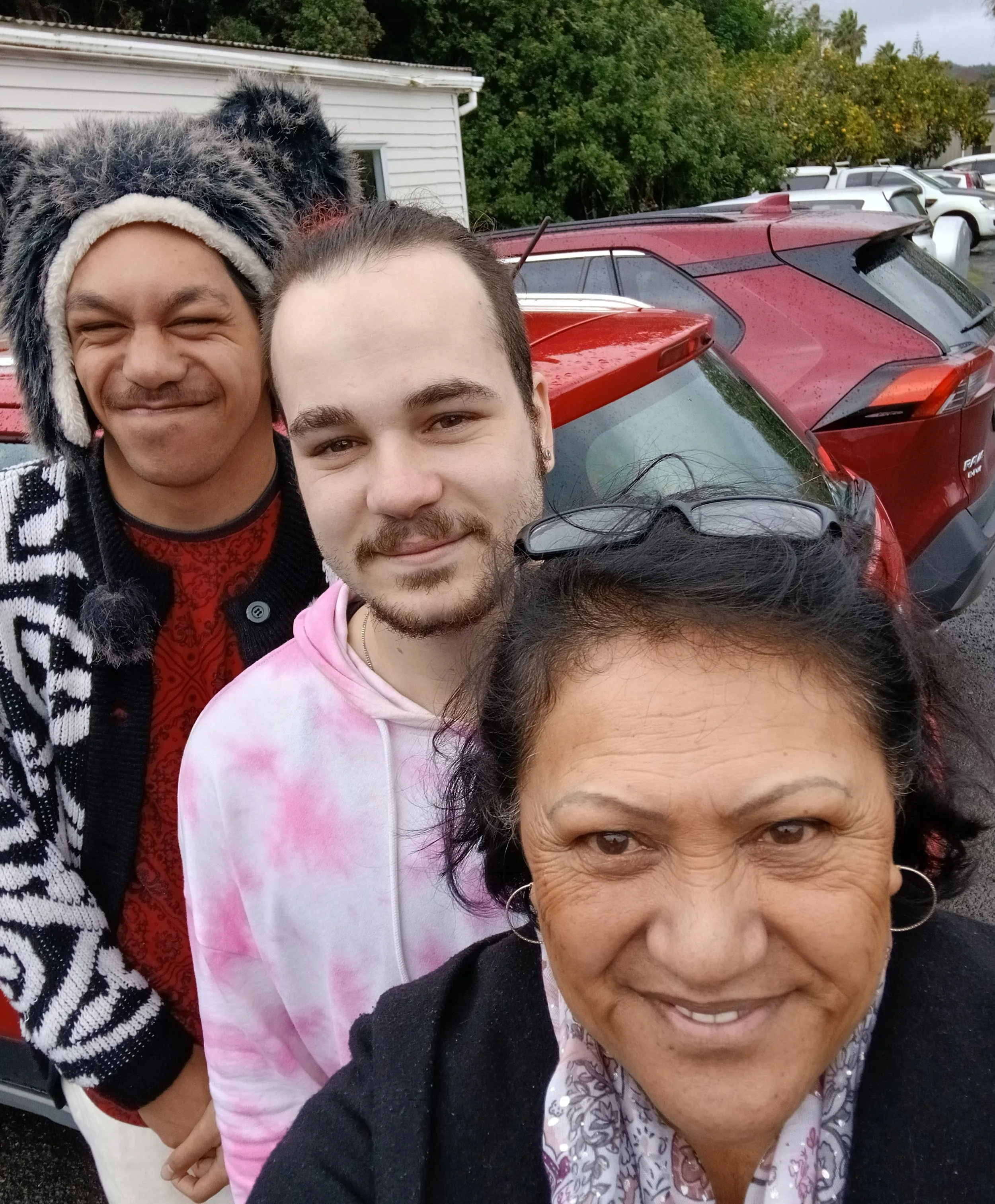
Left to right: Shannon, Rus, and Jo.
Shannon is 22 and came to CCS Disability Action a little after Rus. He lives with his dad, Ben, and his younger brother, and the family recently moved to Kamo, about ten minutes from the office on the bus.
When Jo first met him, she went to the family home to talk with Shannon and Ben. What did he want? Voluntary work, a way into the community, a path to employment.
Shannon is hard of hearing and has been learning New Zealand Sign Language since he was 16. He communicates with a mix of NZSL, gesture, writing, and a smile that does a lot of the talking for him.
Ask Shannon what he likes best about working at the Clothing Barn, and two things come quickly. Meeting new people (with a smile across the table to his friend Rus). And getting some new clothes for himself, which earns a laugh from everyone in the room – it turns out Shannon is well known for his sense of style.
Getting to the Clothing Barn has been its own achievement. Part of Shannon's support has been learning to travel independently by public transport. With a Support Worker alongside him, he learned to understand the bus timetable, use his bus pass and catch it safely and confidently.
For Shannon, the bus is not a small thing. Getting where he wants to go, on his own steam is rightly a source of pride of him.
It is a quiet kind of independence, and it means a great deal.
"Shannon has come a long way," Jo says, describing how he’s come out of his shell and built his self-confidence.
Both young men are at the Clothing Barn on Wednesdays and Fridays, from half past eight until early afternoon. Between them they have the place running like clockwork: the clothes sorted, shelves neatly stacked, customers greeted. Jo connects with them as they come in.
"When Shannon gets here, he usually pops into the office and we have a catch-up before he heads down," she says. "We have a check-in, so I can see how he’s going."
It is the same kind of steady presence both men describe.
Along the way, both have mastered the kind of skills that any workplace runs on. They have learned to organise their tasks and see them through. They have demonstrated an ability to get along with the people around them, the team in the office, the volunteers, and the customers who come through the Clothing Barn. Most of all, they have shown up: dedicated, reliable, there on the days they say they will be.
Somewhere in all of this, the two of them became friends. They turn up on the same days, work the same shifts, and have built the easy rhythm of people who genuinely enjoy each other's company.
Asking Jo and Rus how they would describe Shannon and the words come easily: funny, easy-going, a bit of trouble in the best way, and that smile again. Rus, for his part, talks like someone who has found his feet. A reserved person who became a role model. A man who now is taking the opportunity to give back.
For both, the change is the same at its heart. They are out of the house. They are building skills and independence. They are around people. They are needed, doing mahi that makes them happy.
"That's basically what I've always wanted," Rus says. "Just to get out of the house and be with people."
A sentiment that is shared by both.
About CCS Disability Action
CCS Disability Action is the largest pan-disability support and advocacy organisation in Aotearoa New Zealand.
We support people with all types of impairments and have been working alongside disabled people since 1935.
We are at the forefront of service provision, advocacy and information sharing in the disability sector. We partner with disabled people, their families and whānau to enable them to have choice and control in their lives. Our vision is to see every disabled person and whānau hauā interwoven into the lives of their whānau and community.