
News about the oak tree at our Whangārei office
We wanted to share that the large oak tree at our Whangārei office is coming down, and we know this kind of news can be hard to hear. Work to remove the tree is due to begin this week.
The tree sits right on the edge of our front car park, next to our office building. After a lot of thought, and seeking guidance from several qualified arborists, we have made the difficult decision to remove it.
We did not reach this point quickly. We looked closely at whether we could keep the tree and manage the problems around it. We could not find a safe way to do both.
What problems has the tree caused?
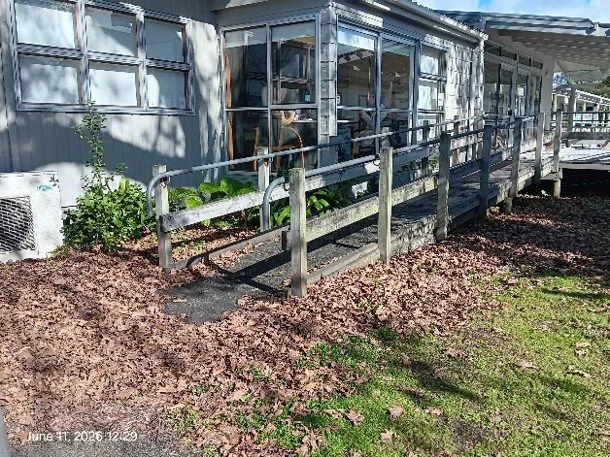
The tree is much loved, but it drops heavy leaf fall, twigs, and branches across the car park, entrance, and access ramp. At times, the leaves have built up several centimeters deep, making it difficult or impossible for people using wheelchairs, or those with low vision or limited mobility, to reach the front door safely.
Service Manager Amanda Vunn says the situation conflicts with the organisation’s purpose.
“People come here for everyday support, including applying for mobility parking permits,” she says. “We were asking disabled people to cross an unsafe surface just to reach our door. That does not align with who we are or what we stand for.”
The organisation maintains its large property with support from volunteers and staff but does not have the resources to fund a position dedicated to mitigating the impacts of the tree.
“We need to make sure our funding is used to support disabled people,” she says. “Maintaining this tree would mean redirecting resources away from that work, which we do not think is appropriate,” says Amanda.
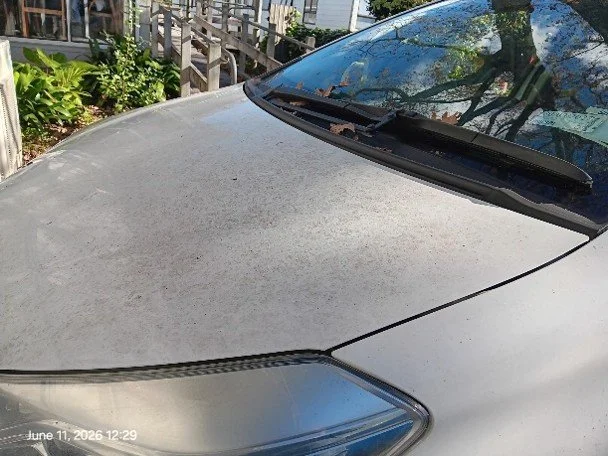
In addition to the leaf fall, the tree produces a sticky sap that coats vehicles, windows, and windscreens. Staff have reported visibility issues when driving and it damages the paint on the vehicles – increasing maintenance costs.
Large branches have also fallen onto the building. This is a serious safety hazard, and it has put our roof at risk of damage.
With all our spending decisions carefully considered, this doesn’t feel like a sensible use of our resources.
Could the tree be saved?
We understand that people often feel upset when a large, established tree comes down. We feel it too. These trees take decades to grow, and they matter to the people who live and work around them.
We asked several arborists whether there was any way to keep the tree and fix the problems. Unfortunately, they could not find any long-term solutions. Pruning and other measures would not stop the falling branches, the sap, or the leaf build-up.
We have concluded that removing the tree is the only option that keeps our office safe and accessible. The work is scheduled to start from the week of Monday 15 June 2026.
What happens to the timber?
Most of the tree will be reused. Larger branches will be cut and stored for firewood, which will be distributed to the community next winter. A section of the trunk will be kept for a future project, while the main trunk will be milled for housing use. Smaller material will be mulched.
The firewood project will be supported by a local arborist from TreeCycle in Hikurangi, who is donating time to help manage the process.
Frequently asked questions
When will the oak tree be removed?
The work will likely begin this week.
Why can't the tree be kept and pruned instead?
Our arborist confirmed there is no way to keep the tree and stop the falling branches, sap, and leaf build-up. Removal is the only safe and financially sustainable option.
What will happen to the wood?
We are working with local organisations to turn the timber into useful wood for the community, rather than letting it go to waste.
Who decided to remove the tree?
We made the decision after seeking advice from a qualified arborist. The safety and accessibility of everyone who uses our office came first.
About CCS Disability Action
CCS Disability Action is the largest pan-disability support and advocacy organisation in Aotearoa New Zealand.
We support people with all types of impairments and have been working alongside disabled people since 1935.
We are at the forefront of service provision, advocacy and information sharing in the disability sector. We partner with disabled people, their families and whānau to enable them to have choice and control in their lives. Our vision is to see every disabled person and whānau hauā interwoven into the lives of their whānau and community.