
The service Matt Whiting was hired to build didn't exist yet
On his first day at CCS Disability Action, Matthew Whiting (Te Rarawa) was handed a service that did not exist.
His job was to set up supported living in Ōtautahi Christchurch. There was no contract for it, and no money either. So, his first task was to build it, and his second was to go and find someone to pay for it.
That was August 2001. Twenty-five years later, the service is still running and Matt is still here.
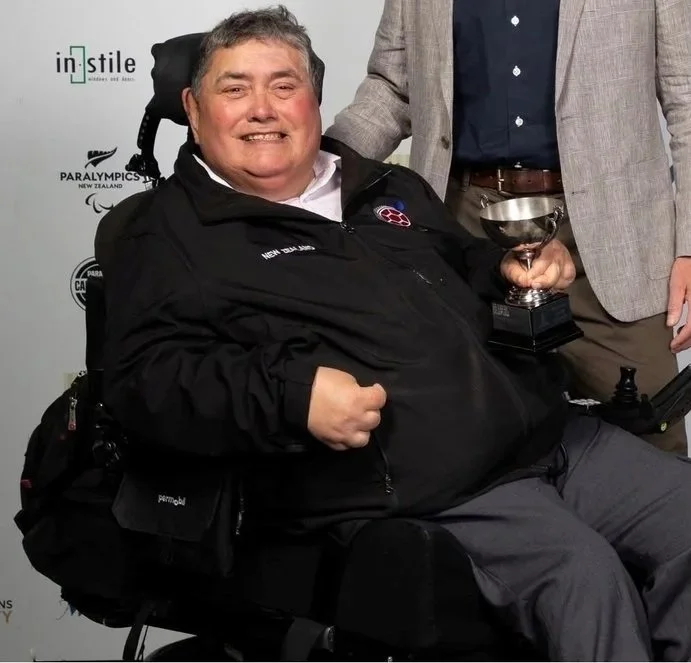
He has just begun a new role as Adult Safeguarding Advisor, after several roles over the years. Most recently he was Service Manager for Adult Services at CCS Disability Action Canterbury West Coast. He is also a disabled person who has been supported by the organisation for almost the entire time he has worked inside it.
Ask Matt what the options were for disabled people in 2001 and the answer is short.
"It would be ad hoc," he says. "Depending on what community you were in."
Supported living existed in pockets around the country, and not in his city. It means a disabled person lives in their own home, with their own front door, their own routines, and support built around what they want their week to look like.
So he, and others, helped build it. Asked how much freedom they had, he laughs. "Lots."
He was not working alone on the thinking. Matt was part of a national office working group set up to establish supported living across the organisation, led by Bill Baker from Hamilton. Disability stalwarts and former colleagues Lorna Sullivan and Michael Kendrick shaped how he thinks about the work.
"My first task was to get a contract," he says. He credits former General Manager and Chief Executive David Matthews with getting money in the door early enough to matter. "If it wasn't for David's commitment to disabled people's independence, we wouldn't have got supported living as fast as we did."
Both sides of the same service
Matt has managed services, and he receives them. So, he has never been able to treat a service design decision as a paperwork exercise. He knows what support feels like from the receiving end on a bad week, not only how it reads in a contract.
"Even though I work here, as a disabled person, you cannot not be affected by changes," he says.
The changes he means are the ones landing on disabled people and whānau right now. His answer on them comes in two halves.
"Maybe it’s a good in the sense that people are coming together," he says. "Bad in that it's been a terrible time for disabled people."
Then he goes to the good half. "The disability community got organised."
He has watched that happen across providers, groups, and towns, including his own. People who once worked in their own corners started turning up in the same rooms. Some of it, he says, is because information now moves sideways rather than down from the top.
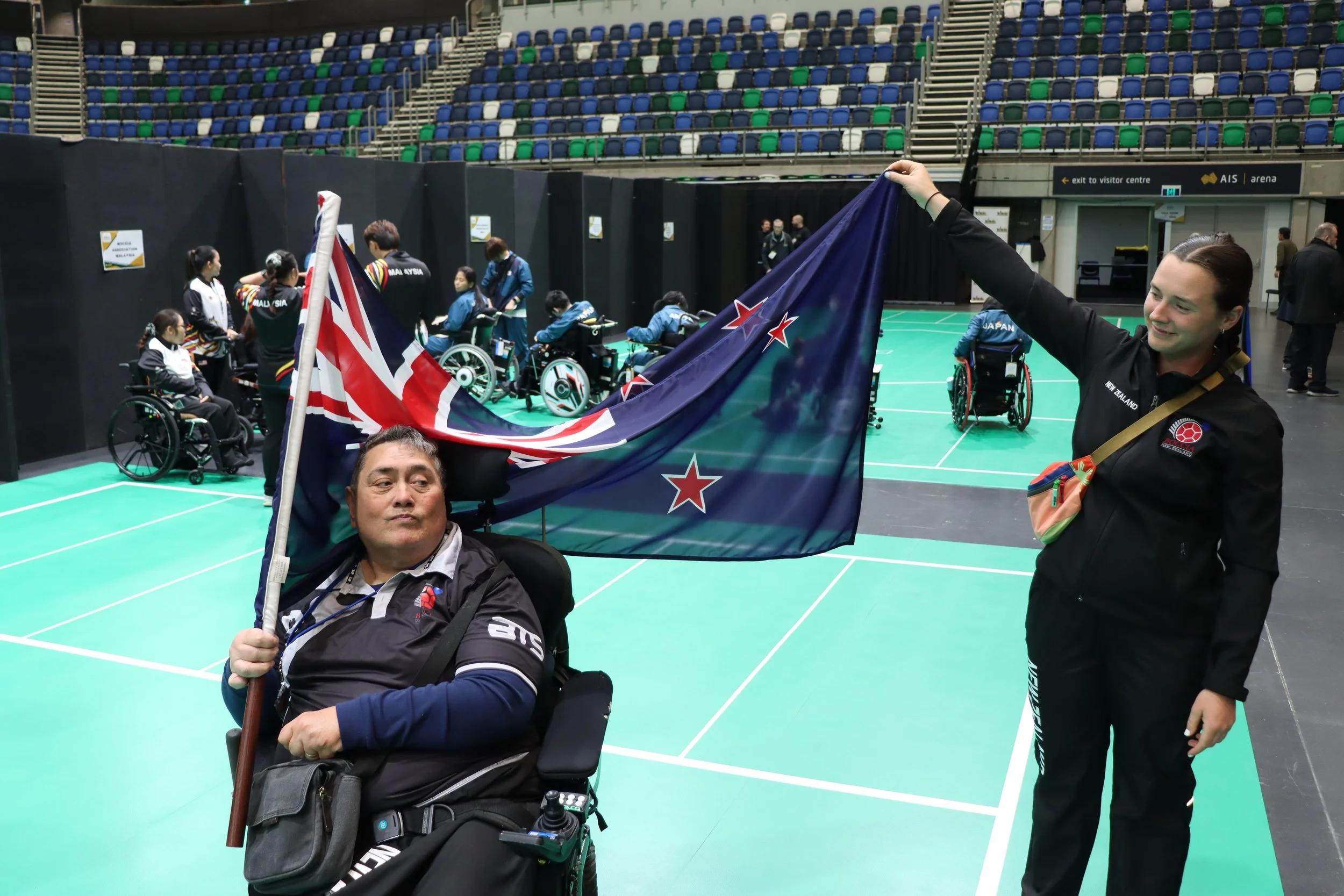
He is proud of where CCS Disability Action has put itself. "I think we're brave enough to put things out there that others aren't. I also see that we are committed to amplifying the voices of disabled people," he says.
He is philosophical about the rest. "The pendulum has swung in one direction and that is making it very hard for disabled people. It will swing back again eventually."
Asked what he would say to disabled people and whānau right now, Matt does not offer reassurance. He offers instructions.
"Enrol," he says. "And vote."
Why he is still here
So why stay?
"I don't really want to be cliché," he says. "But I think it's the values and the way we support people. I believe in supporting people the way we do."
"In the past, we supported people in a traditional way," he says. The old model where the service decides and the person fits in around it. He was hired into the shift away from that, and he has spent 25 years making sure it kept moving.
Those values run through his life outside the office too. Matt’s wife Karen also works for CCS Disability Action, and they share the same view of what good support looks like. They have been together 13 years and married for one.
The court in Pilsen
At time of publishing Matt is close to getting on a plane.
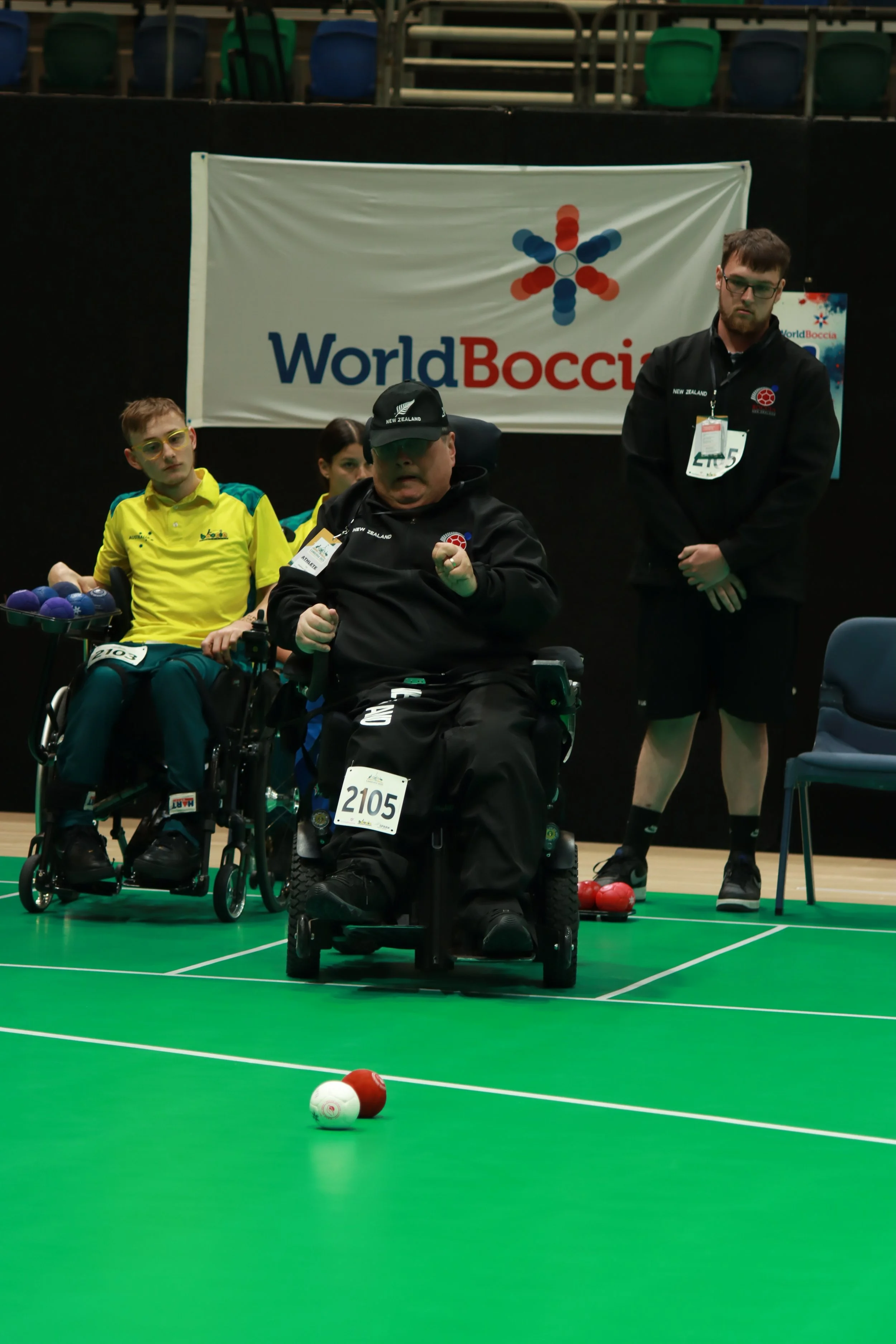
He plays boccia, a precision ball sport played on an indoor court. Players roll leather balls as close as they can to a target ball called the jack. It is one of the most tactical sports there is, and he trains for it with staff and students at the University of Canterbury.
Boccia is one of the few elite sports designed around disabled athletes from the ground up, rather than adapted for them.
"It shows disabled people can do international sports. We need to celebrate disabled sport as much as other sports," he says.
Twenty-five years ago, Matt Whiting arrived at a job with no service, no contract, and no money attached to it. Now he is off for a fortnight to represent New Zealand on a court in central Europe. Not bad for a self-described extrovert and someone who doesn’t mind stepping into the unknown.
About CCS Disability Action
CCS Disability Action is the largest pan-disability support and advocacy organisation in Aotearoa New Zealand.
We support people with all types of impairments and have been working alongside disabled people since 1935.
We are at the forefront of service provision, advocacy and information sharing in the disability sector. We partner with disabled people, their families and whānau to enable them to have choice and control in their lives. Our vision is to see every disabled person and whānau hauā interwoven into the lives of their whānau and community.