
Lisa’s local advocacy creates change in Palmerston North
Published 29 September 2026
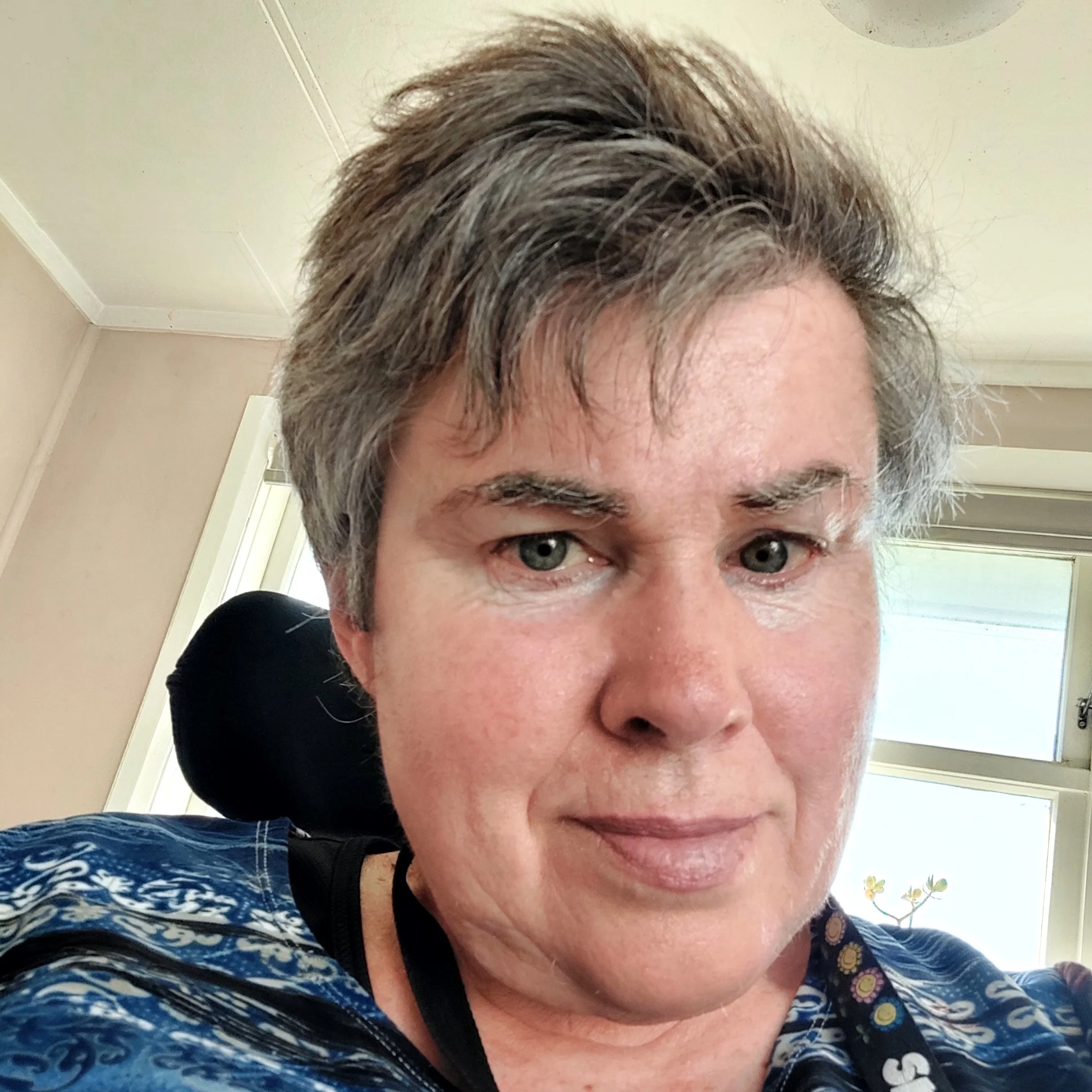
Lisa.
When Lisa headed out for a routine trip to the shops last November, she was not expecting anything to be different. She had headed to The Plaza in Palmerston North when she noticed the parking area behind the shops had been repainted. A long mobility bay had been created, freshly marked out on the ground, with the traffic lane curving around it.
"I thought, oh, this is amazing," she says. "It was so exciting to see it."
Lisa uses a power chair, and she gets around the city in a mobility taxi. A mobility van loads and unloads out the back, on a ramp. The person coming out needs a good stretch of clear space behind the vehicle, not beside it, like other mobility parks.
For years, van drivers had used one particular spot at The Plaza. It was not a marked mobility bay, but it was the safest place any of them could see.
"We were always parking in the same space," Lisa says. "Then all of a sudden I heard from the van driver that there'd been complaints made to the management about where we were parking, and that we were interfering with the flow of traffic."
That stung. "We'd been parking there for years and years, and it was just all of a sudden. There was nowhere else to go, so it wasn’t nice to feel like my actions were a problem."
The Plaza is the city's main central shopping centre, in the middle of Palmerston North. It has more than 1,200 car parks and is the ‘go to’ place for locals. By November it was busier again, with the Christmas rush building and cars moving in and out all day.
The alternative offered was to use the marked mobility parks instead.
"If we'd done that, we would have been right in the flow of traffic," Lisa says. "That option was really, really unsafe."
She was not imagining the risk. Ali Sigley, her Coordinator at CCS Disability Action's Manawatū branch, remembers how close it had already come.
"They've got mobility taxi parks in the Plaza, but you offload out the back into the traffic," Ali says. "Lisa nearly got hit once, with someone going fast around the car park."
Lisa rang Ali to talk about the situation. That conversation sparked a significant change.
The years before the car park
Ali has been at CCS Disability Action for 16 years, and has worked alongside Lisa for nearly 10 of them.
Lisa acquired her impairment as an adult, after surgery. She went into hospital one person and came out another, and the years that followed were long and hard. What she wanted back, more than anything, was her independence.
Ali's mahi with Lisa in that time has had little to do with paperwork. It has been about rebuilding self-esteem, supporting her into her own home and building a different kind of life.
"Lisa is a strong self-advocate for her independence," Ali says. "But her journey has been really difficult to where she is now. She’s an incredible woman."
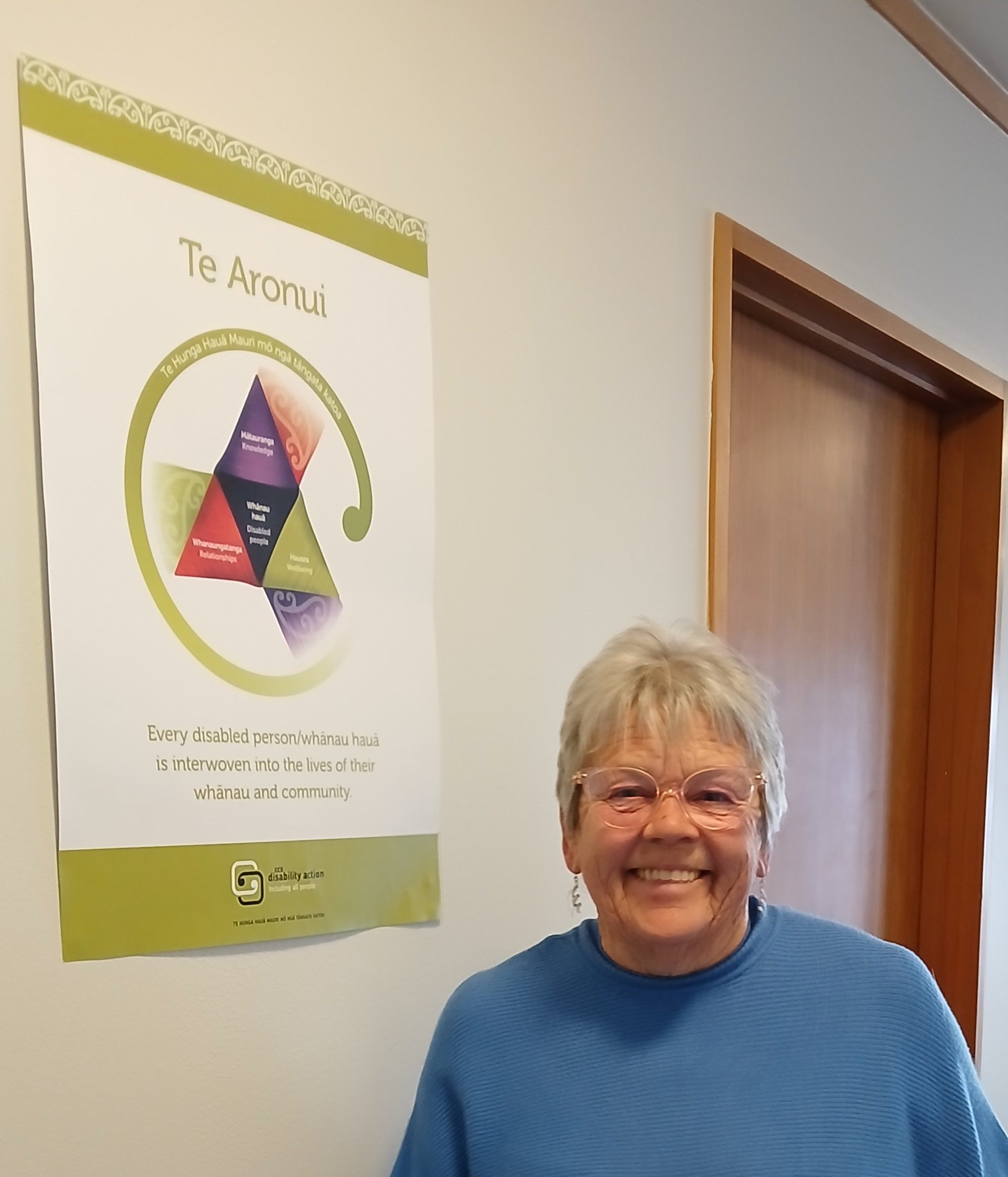
Ali.
Lisa describes Ali plainly and warmly. "I couldn't speak more highly of Ali. She's just got the heart for the work that she does. She understands. And she's very kind, and to the point."
She also has a lot of contacts, which is what mattered on the day Lisa rang about the car park.
"I said, what I can do is link you up with somebody from the city council and connect you, so you two can have a chat about what the issue is," Ali says.
The contact was Susan Calkin, who was working in project management at Palmerston North City Council at the time and covering the infrastructure role. Ali asked whether she would be willing to talk to Lisa and she was.
"All I did really was email, pass on phone numbers, and connect them," she says. "From there, Susan worked alongside Lisa and the Plaza management."
Lisa found Susan willing to engage and to hearing her experience. "She was really, really good, really receptive. A lovely, lovely woman. She went in and talked to the management."
There was no quick fix. That first space could not be formally set aside, and the options put forward were not much better than what they already had. Lisa had her conversations, and then, honestly, she lost track of what happened next.
"I don't know how exactly it got resolved," she says. "I just had a talk with Susan, and then one day I went to the Plaza and saw that the mobility park had been painted and done."
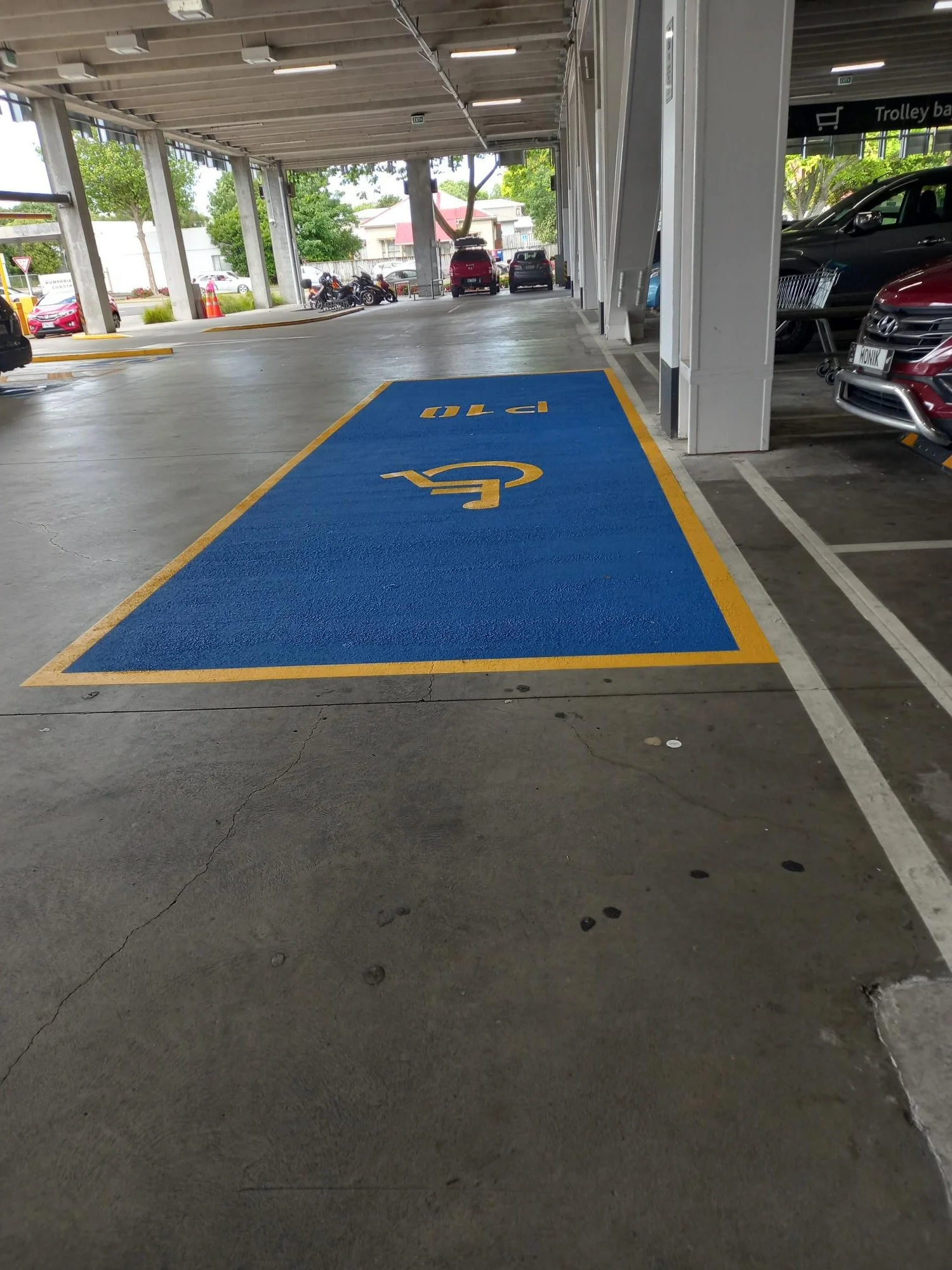
The new mobility park.
What went in was bigger than what Lisa had asked for. A long bay, sized so a mobility van can pull in and unload out the back with room to spare. Other cars now drive around it, rather than through the space where people are getting out.
"It's honestly been more than I had hoped for and it feels great to have contributed to positive change," she says.
Ali has watched the difference from the inside of the mall. "I've even walked into The Plaza myself on the weekend and heard people say, oh my goodness, that's so much safer. Other people I support have said, when they noticed it, that was a really good idea."
Lisa is measured about her own part in it. "I think I just got the ball rolling. I don't know if it did a lot."
But she is clear about why it mattered.
"I was really, really excited to see it, because we really needed to have that to say, look, we are able to park here. This is safe."
It was never only about a car park. It was about being able to say, with paint on the ground, that disabled people had every right to be there.
Where it goes from here
Lisa is not, by her own description, a natural campaigner.
"I like to stay reasonably anonymous, because I'm kind of an introvert," she says.
Advocacy had not been on her radar before this. "Not really. I just wanted to keep our community safe, and I thought, well, I’ve got to say something."
Ali thinks something changed for her in the doing of it. "She was feeling so proud of the fact that she navigated this with very little support from me – and rightly so," she says.
Lisa is now part of the Manawatū branch's Voice and Action group, which the CCS Disability Action team supported to get going. It is still fairly new. About eight people meet once a month in one of the rooms available at the branch. They work through what they have seen around the city that needs changing.
They are disabled people with different impairments, which Lisa rates as the best thing about it.
"I get a view of somebody else's barriers and how they see the world, and they get a view of what I experience," she says. "It really opens up your eyes."
Her own list at the moment is the footpaths in the city. Kerb drops that are hard to negotiate. Cracks lifted by tree roots. Stretches where wheelchair users end up out on the road with cars.
"I’m noticing barriers that impact not only wheelchair users, but elderly people," she says. "Anybody using a buggy. People that can't lift their feet. So many things. I'd like to see some money go towards infrastructure."
She feels positive change takes a team effort and this is something she feels is alive and well in Palmerston North. "There's a lot of other people out there advocating."
For anyone looking at something unsafe in their own town and wondering whether to bother, Lisa's advice is practical.
"If it's outside a store, try the store owners first," she says. "If you don't get any joy there, go to the city council, or even CCS Disability Action. They've got all the knowledge. They've been around for donkey's years, and they've got so many contacts. They can quite often send you in the right direction."
The Voice and Action group is open to new members. "Absolutely," Lisa says, when asked whether they have room for more people. Anyone interested can contact the Manawatū branch reception to get in touch and find out more.
Lisa is still inclined to minimise her role in the change.
"I'm just one person," she says.
But a drive past the Plaza shows that one person can indeed have a big impact. And Lisa has most certainly done that.
Learn more about Voice and Action groups here.
About CCS Disability Action
CCS Disability Action is the largest pan-disability support and advocacy organisation in Aotearoa New Zealand.
We support people with all types of impairments and have been working alongside disabled people since 1935.
We are at the forefront of service provision, advocacy and information sharing in the disability sector. We partner with disabled people, their families and whānau to enable them to have choice and control in their lives. Our vision is to see every disabled person and whānau hauā interwoven into the lives of their whānau and community.