
On a good day at Coffee Culture in The Palms in Christchurch, someone will tell Ruby she has made their day. She appreciates those compliments more than most.
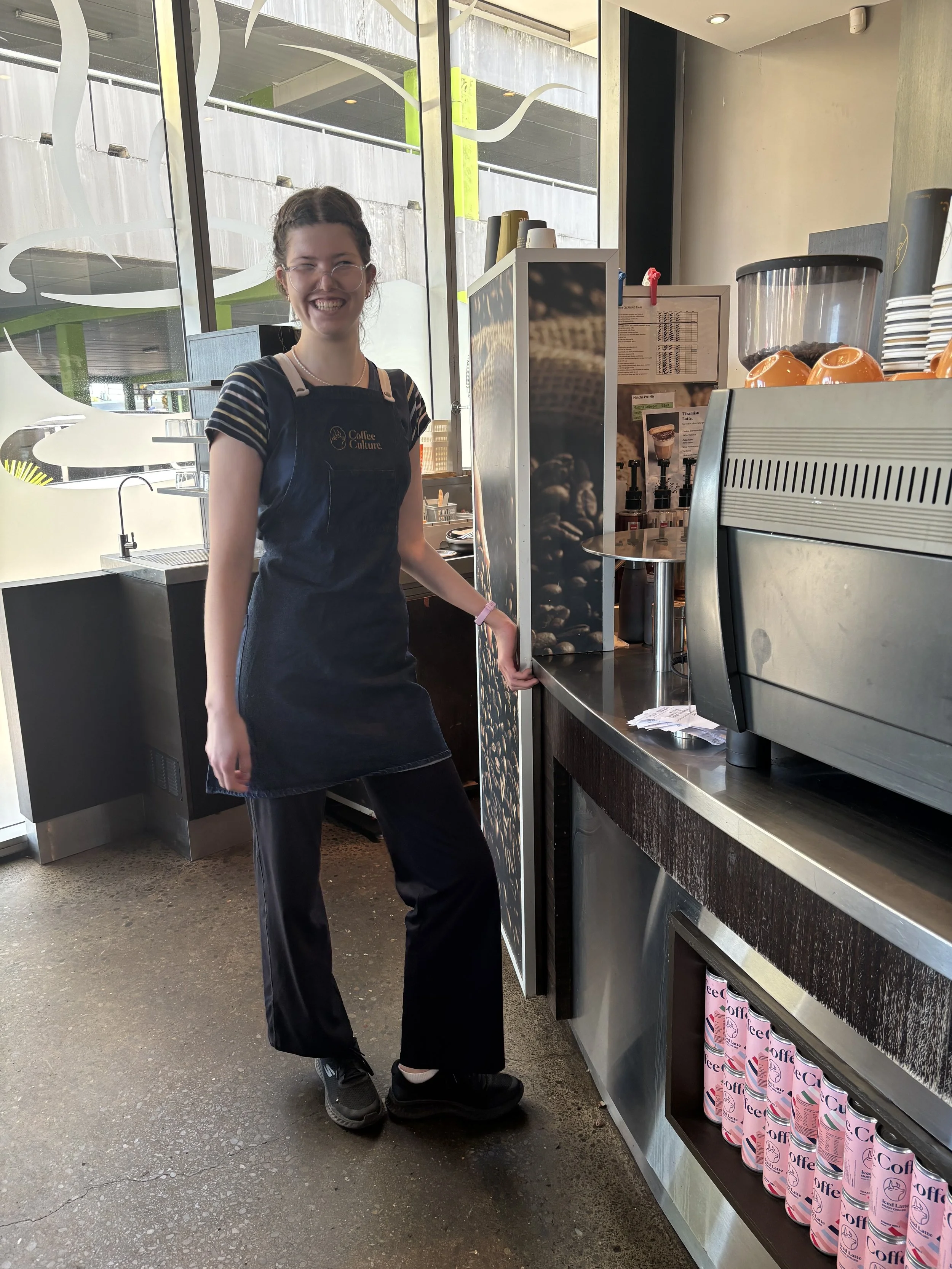
Ruby at work.
A regular having a hard morning, a stranger who needed a small kindness, and Ruby behind the counter in her striped shirt and apron, doing the thing she loves most.
"I've had so many experiences with people that have had bad days," she says. "They said, your smile has made my day."
It is the first thing she wants you to know about her.
Doing a really good job and making Coffee Culture’s customers’ days brighter is, by her own account, a big part of what makes the mahi meaningful. "I love it," she says simply.
Ruby is 19 and is friendly, articulate and quick to share a laugh – it’s easy to see why hospitality would be a great fit for her.
She lives on a 12-acre farm on the edge of the city with her whānau, four cows, two sheep, a few leased paddocks for horse grazing, and a cheeky dog named Max.
The family moved there about 10 years ago, and Ruby was sure she would hate leaving her ‘city’ life behind. Instead, she was the one who loved farm life the most, embracing the opportunities its offered. She took up horse riding, and during school joined a Riding for the Disabled programme.
Ruby is the youngest of three siblings. Her older brother also lives at home and her sister is currently in Australia on a Christian youth programme. Church every Sunday is part of who Ruby is.
She is also, as she will tell you, very organised. She has a morning routine, a structure, a plan. While her plan has a clear next chapter, getting here has taken real work.
A long year
When Ruby finished school in 2024, she already had a sense for what she wanted next. She had completed a hospitality course at vocational education provider Ara, and working at a café felt right. "I knew that café-work was going to be a good industry for me," she says.
Knowing what you want and finding it are two different things. Ruby spent close to a year looking. "It was a long process," she says. "A lot of applications, a lot of looking for jobs."
She was not doing it alone. Ruby works with Lisa, her Community Support Coordinator at CCS Disability Action. Before Lisa, Ruby had been with a different provider and didn’t feel she could be herself. "I feel like I wasn't as open as what I wanted to be," she says. Choosing Lisa was a decision Ruby made with her mum and dad’s support. "We had a strong connection straight away. I could feel like I could be open with Lisa," Ruby says.
Through that long year, the two of them tailored cover letters and matched CVs to each role. Where jobs were not advertised, Lisa asked for work-experience placements instead. It was – and still is – a hard time to be job hunting, even more so for a disabled person, with skilled people chasing fewer roles.
Then, around October, her dad approached the team at Coffee Culture, a popular local café in their area. The manager, Jacinda, was prepared to give Ruby a go and with Lisa’s support she was ready to take on the challenge.
Feeling welcomed
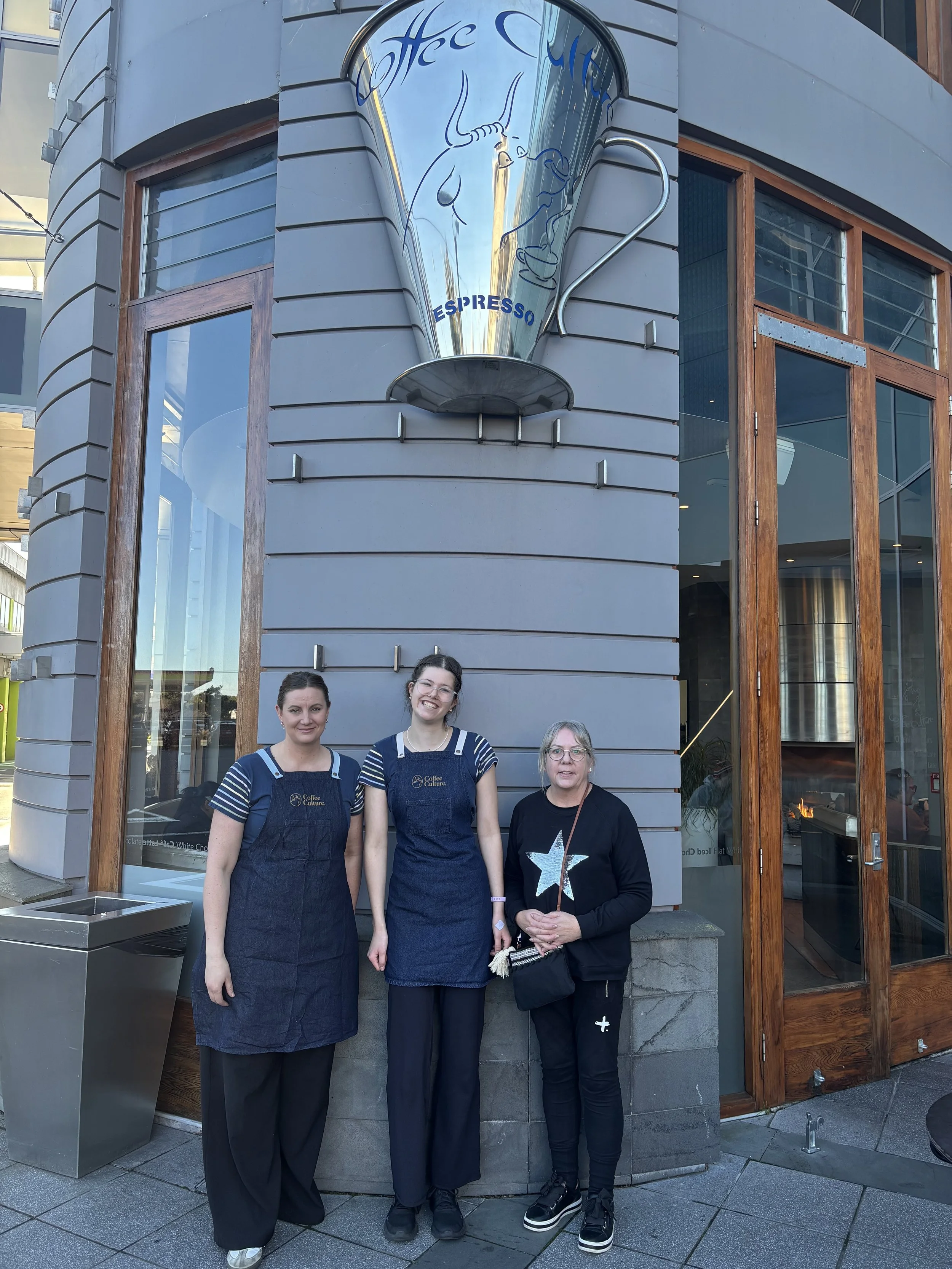
Ruby (middle) with Jacinda (left) and Lisa (right) at Coffee Culture.
Ruby remembers the first day clearly, all these months on. "It was exciting, but nerve-wracking at the same time," she says. What she remembers most is how it felt to walk in. "I felt welcomed by the team. I felt like I was meant to be there."
She started on dishes, carrying out coffees and food, then moved to the till. Her hospitality course meant she was not starting from nothing. "My course helped. I kind of knew how things should work, which helped," she says.
There was a moment on the till, early on, that Ruby holds onto. "I have a learning disability, and I thought I couldn't do the till and I couldn't do all those things," she says. "But I could do it. I proved myself wrong."
Her impairment impacts her ability to take on new information, but not her motivation or dedication. "I learn slower," she says. "But I don't let that put me down. Just because I learn slower doesn't mean that I won't get it in the end." Sometimes she just needs things explained a different way, and she has found, at Coffee Culture, a team more than willing to do that because of what she brings to the role.
The placement was a test, in the best sense. In Lisa’s experience, work experience is best to run for around four-to-six weeks, so that both the employer and the young person know whether they are a good fit for each other for paid work. "Everyone normally knows by then whether or not they want to go any further," Lisa says.
Ruby's placement was extended. It was going somewhere.
Lisa feels Jacinda has been an important part of Ruby’s ongoing success. Her openness and ongoing support have made a real impact.
“From the first moment Ruby first came in store she had such a positive attitude and a real determination to succeed. She has overcome challenges with resilience and credit to the team for their support,” shares Jacinda. “Ruby is incredible. Reliable, always on time, often early and consistently giving her best showing her eagerness to listen and learn. She brings genuine kindness, a huge smile and a few dance moves to every shift. It is privilege to be part of her journey and watch her confidence grow and become such a valued member of our team.”
In November, Ruby was offered a paid job as a Café Assistant. She now works three to four shifts a week, working around 20 hours per week. She’s extremely proud of Coffee Culture, joking that has spoiled her for coffee dates elsewhere (other people’s coffee never tastes as good as theirs) and that they have the best counter food on offer in Christchurch – something that is hard to disagree with on the day we visit.
Purpose, with a side of all-important fun
Ask Lisa to describe Ruby and she does not hesitate. "She's super keen. She's super enthusiastic. She absolutely wants everybody to have the best day ever," she says. "She loves this job. It means the world to her. It really does."
The job means a wage, of course and Ruby is leaning into age-appropriate ways of spending it. When asked what she does with her money now she is quick to answer. "Clothes," she says with a laugh. "Clothes and food and lots more clothes." And coffees (mostly at Coffee Culture) with friends.
Lisa loves that Ruby can live life on her own terms. "Every young person should have time in their life to have a bit of fun before life gets too serious," she says.
More than the money, the job gave Ruby a structure to her day. "I feel like I have a purpose of getting up in the morning," she says. "I can get up and go to work. And I can impact someone's life if they're having a bad day."
Her parents have noticed the change. "My mum and dad are so proud of me," Ruby says. "They never thought that I would be this independent. I think they're so happy to see me blossom." She remembers coming home after her first day of work experience. "They were like: ‘You look so happy’. And I'm like, yeah, I am."
Building Ruby’s independence
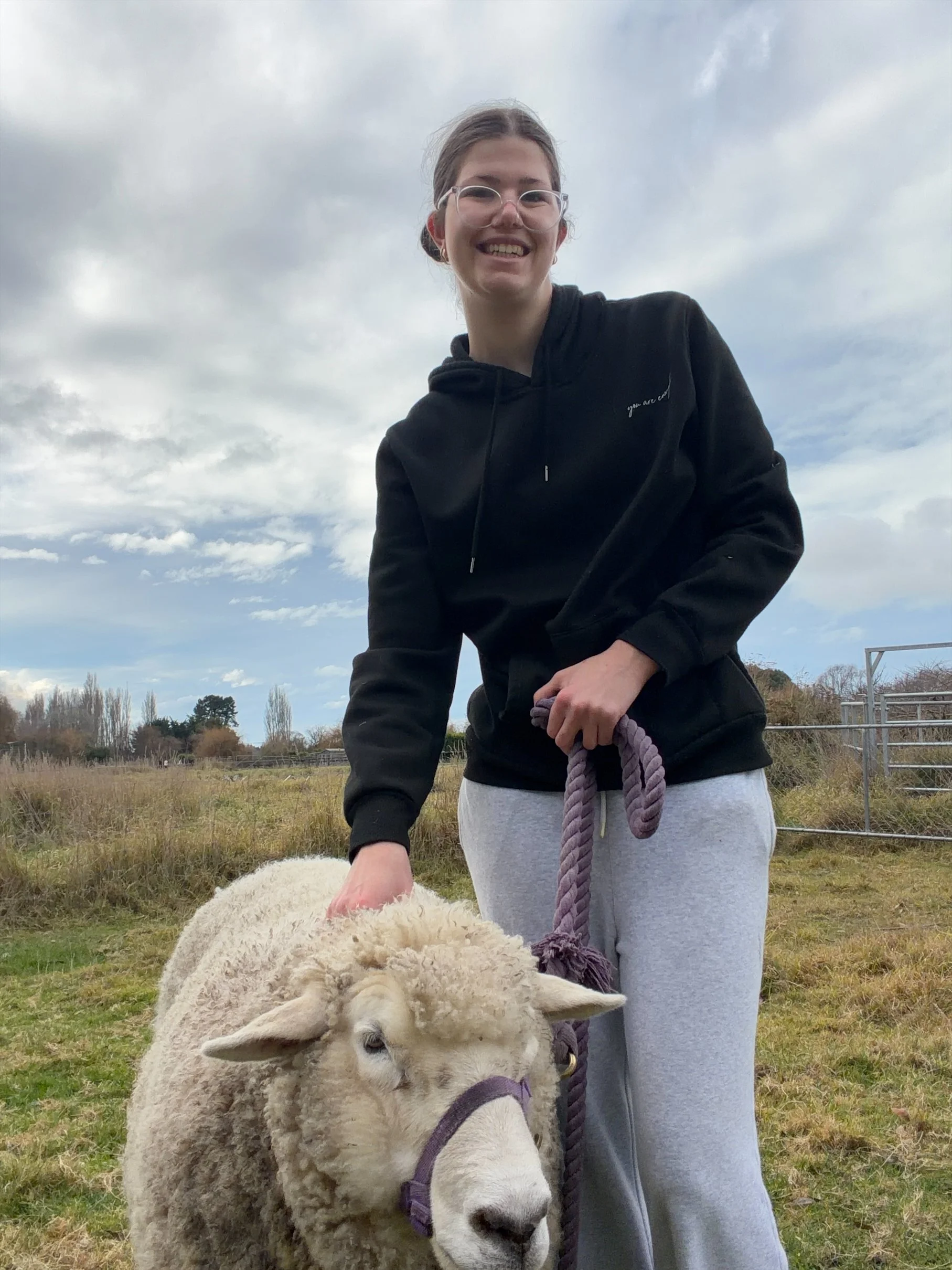
At home with one of the farm’s sheep.
The job brought something Ruby had wanted for a long time, and it has been a catalyst for other changes in her life.
To start with, Ruby walked to a bus stop and caught the bus to work by herself. But the roads near her home are busy and some of her shifts finished when it was dark, making it unsafe for her to get to and from work due to her impairment. Her mum was picking her up some days which was not the independence Ruby was after.
So, Lisa went to work on the practical side. Together they put in a Total Mobility application to make taxis more affordable and completed a Ministry of Social Development Job Support Fund application to help cover the trips to work. The fund now covers seven of Ruby's eight weekly trips. When Ruby's family was in temporary housing during renovations, the fund simply approved the new address by email. "The team at MSD were so flexible and have been really helpful overall," Lisa says.
Now Ruby books a taxi every morning and gets herself to work. It sounds small. To Ruby it is not.
"It means that I don't have to rely on my mum and my dad," she says. "I didn't want to be that person to rely on them. I feel like I was getting older, and I wanted to have that independence."
Ruby is grateful for Lisa’s support and for the knowledge she has tapped into over their time together. "I don't know where I would be without Lisa’s support. I feel like I would be in a whole different workplace. I wouldn't be this happy."
Ruby’s message for other disabled people
Ruby is already building toward her next big goal. The long-term plan, talked through with her mum and dad, is a flat on the family property, hopefully with a friend. She is getting ready for it in practical ways. The family cooks in a roster now, so Ruby is learning to cook. She does all her own washing; she keeps her room tidy. "Mum doesn't do it," she says. "It's all me."
"It's kind of just naturally happening," she says. Skill by skill, until she is ready.
Ruby wanted to share her story for a reason. She hopes that other young disabled people, maybe in their last year of school, maybe finished and struggling, might read her story and see something possible for themselves.
Her message to others is clear.
"Believe in yourself. You can do it no matter what. Don't hold back. Because if you hold back, that won't get you anywhere," she says. "You can get through challenges. Just because you have a disability doesn't mean you can't do it. You can do it."
She proved that to herself, one shift at a time, behind the counter at Coffee Culture.