
IHC 2026 Election Forum wrap up
By Phoebe Eden-Mann, National Policy Analyst
Published 14 October 2026
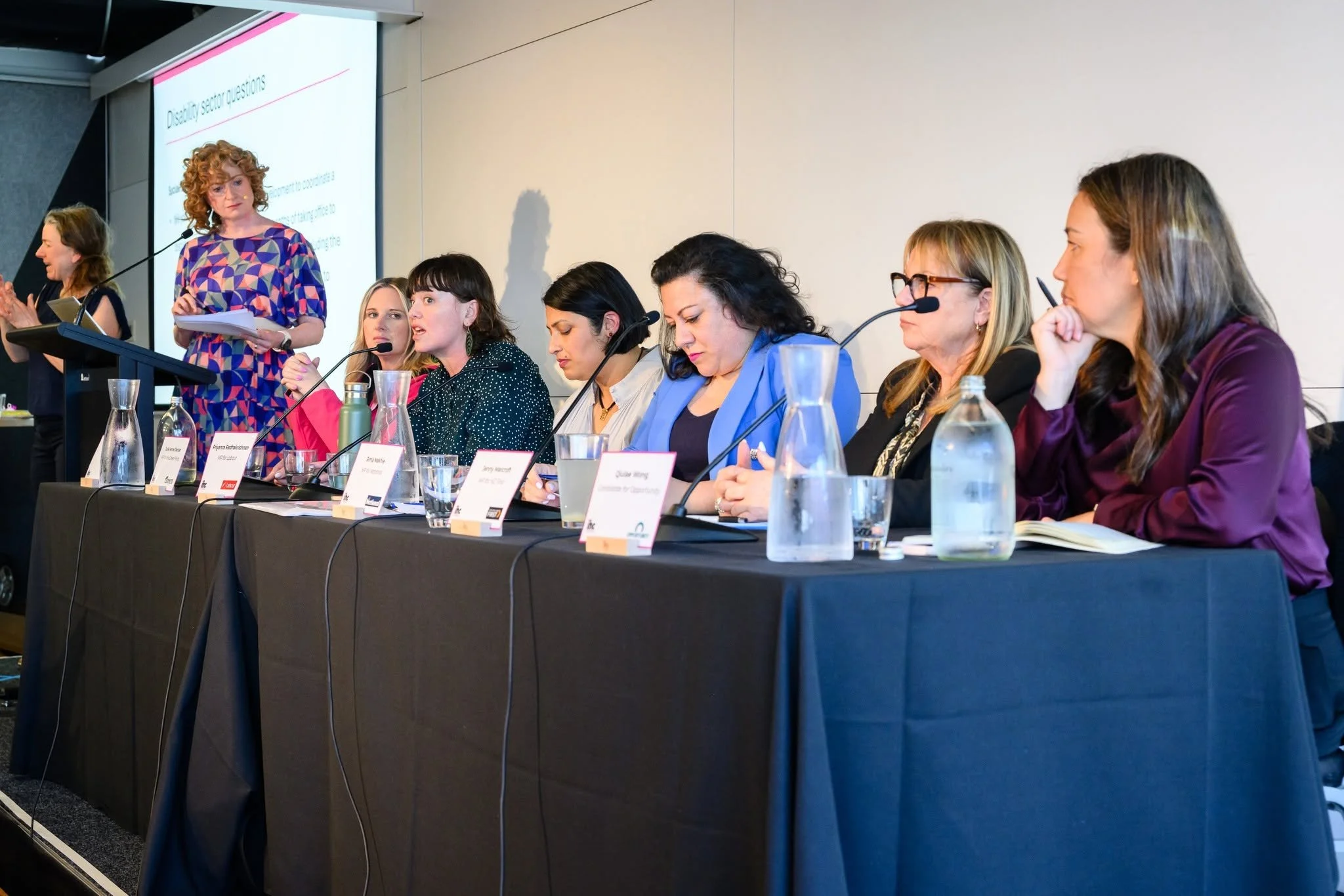
Credit Mark Coote Photographer
In case you missed it, Wednesday 7 October was the Inclusive Futures 2026: National Disability Election Forum co-hosted by IHC Advocacy, CCS Disability Action, DPA, People First NZ, The Personal Advocacy and Safeguarding Adults Trust, Blind Citizens NZ, Complex Care Group, Deaf Aotearoa, and NZDSN. It was a chance for disabled people to directly share their views and concerns with the political parties as well as asking their disability spokespeople questions. I really hope you were able to attend or watch the livestream but if you didn’t have a spare two and a bit hours, never fear, I watched it and can give you the rundown on what happened.
The event was moderated by Susie Ferguson, who once again did an amazing job and was helped out on keeping the politicians on track by an enthusiastic timekeeper with a flag. There were six parties present; Labour, National, the Greens, ACT, TOP, and NZ First. Te Pāti Māori were invited but didn’t take part – a shame as it was a great opportunity for the disability community to get involved in the election. Representing Labour was Priyanca Radhakrishnan, Rima Nakhle for National (in lieu of Minister for Disability Issues, Louise Upston), Laura McClure for ACT, Julie Anne Genter for the Greens, Jenny Marcroft for NZ First, and finally Qiulae Wong for the Opportunities Party. It was exciting to see a panel of all women candidates. Ferguson set the ground rules: No shouting and let the other candidates speak. With the ground rules established and all candidates introduced, we were off!
Question one
The first of four questions was focusing on the use of AI and the complaints process for DSS:
Will your party ensure, within 12 months, an independent and prompt review and appeal process for decisions about services, staffed by people rather than AI?
All the parties acknowledged that the use of AI in decision making that impacts people’s lives like this was concerning and that there needs to be a human element. McClure spoke about the benefits of AI, but how it wasn’t necessarily appropriate for disability support services and needed independent oversight. Radhakrishnan is firmly against AI making decisions that impact lives and argued that AI needs to be regulated.
Labour along with the Greens raised concerns around DSS funding and the DSS Act that passed recently (the legislation was widely criticised including by CCS Disability Action). The legislation was described as “the worst piece of legislation I’ve seen over this term” and that it contravened the UNRCPD. Radhakrishnan said that under a Labour government, they would be redrafting the DSS legislation and it will be a collaborative process with disabled people. Genter said the Greens would aspire to do it within 12 months, and that the need for DSS was growing – the Greens have committed to having a progressive tax system to fund this.
Wong said that TOP had an AI policy where the Government needs to take responsibility for how it uses AI, and that business cases will be needed when AI is proposed to replace public service rules. Marcroft agreed that disabled people need prompt and accessible ways to challenge decisions, and that NZ First are hesitant regarding the use of AI, preferring face-to-face assessments and human interaction “connecting with people in a real and meaningful way” where possible.
Nakhle defended the Government’s actions taken with DSS and said that National had already committed to making improvements on assessment processes. Nakhle said that National wanted to improve the DSS situation with a focus on ‘choice, control, and sustainability’, working to improve the distribution of support services.
Overall, all the parties were on board with at a minimum being cautious regarding the use of AI to make decisions for disability support services, though were hesitant to commit to the 12-month timeframe.
Question two
Next up was a question about Enabling Good Lives:
The NZ Disability Strategy calls Enabling Good Lives (EGL) principles a “touchstone for the future” for designing and delivering services and support for disabled people.
Will you commit Ministry of Social Development and the Minister’s office to consult the National Enabling Good Lives Leadership Group on all decisions about disability policy, ministerial programmes and service delivery, and to consistently embed EGL principles across all policy, processes, practices and decision-making?
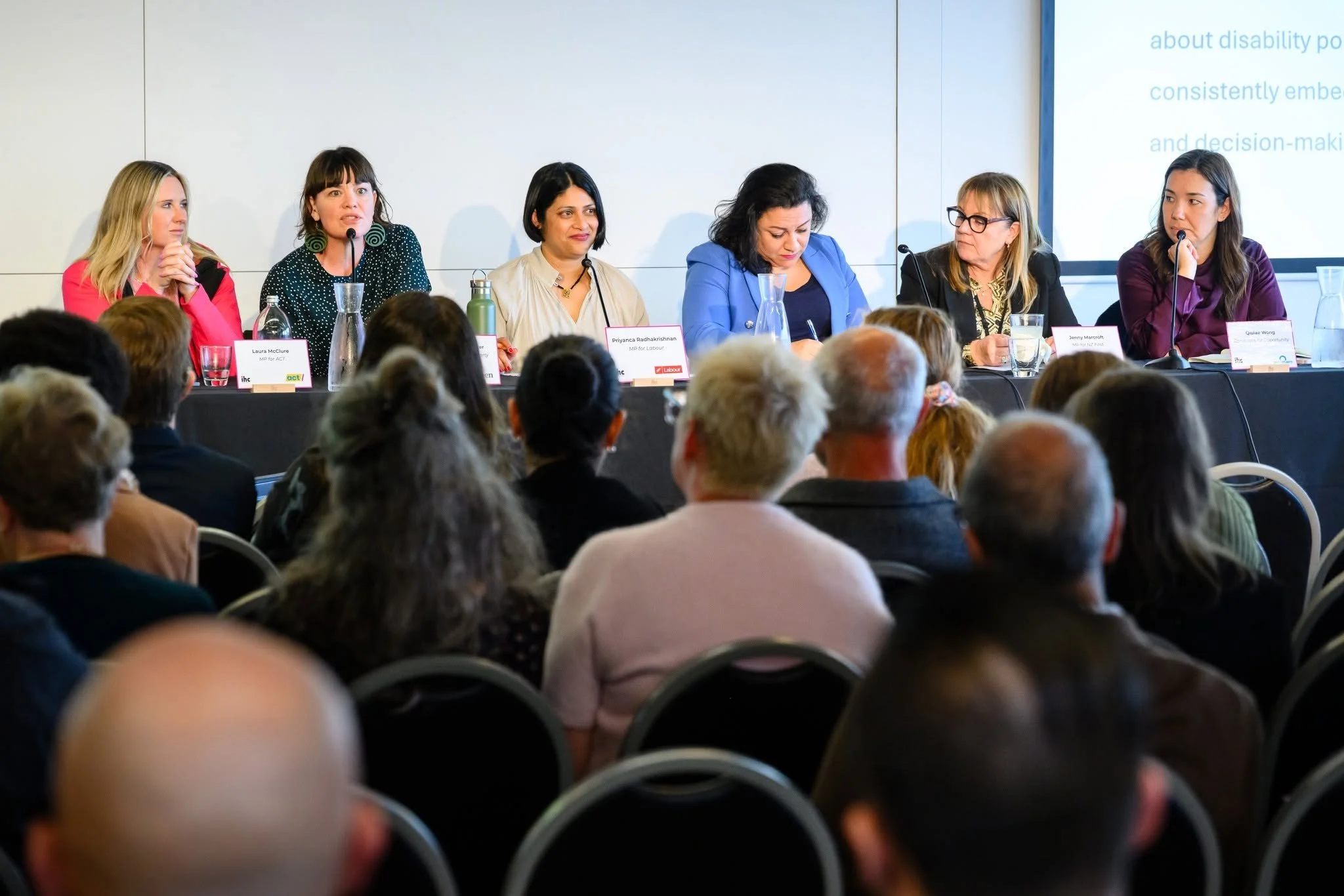
Credit Mark Coote Photographer
TOP said yes, and that they wanted more consultation with the disability community. Marcroft also said yes, and highlighted their members bill about introducing Accessibility Standards – a Bill she hopes will get cross party support (note: a members bill has to be pulled out of the biscuit tin and can’t be progressed until it’s selected for debate). NZ First believes that disabled people must be able to shape decisions from the outset, and that EGL should be reflected across the sector.
Genter for the Greens said yes, and that the issue was primarily that there wasn’t enough government funding. She said the Government had had three years to address this and hasn’t (and said in fact the DSS bill had made the situation worse). McClure pushed back on Genter’s statement and said that there is further legislation to come regarding means testing which will go someway to rectifying some of the issues raised. McClure said she had been involved with the Select Committee process for the DSS bill, and that ACT wouldn’t have supported the Bill to being passed if those changes hadn’t been made as recommended by the committee.
Nakhle recognised that National needed to address the concerns around EGL and UNCRPD, saying that those concerns were why changes had been made to the DSS Bill which in their view now better reflects EGL principles. Nakhle praised Disability Minister, Louise Upston for listening to the concerns of the community especially around the initial wording of the Bill.
Radhakrishnan thought it was “rich for the Government to be supportive now considering the track record” regarding Individualised Funding and DSS funding this term. She said that it shouldn’t have taken thousands of submissions to get Minister Upston to listen to the community’s concerns about the Bill – going as far as to highlight that there had been no consultation prior to the Bill being introduced. Radhakrishnan also announced that if Labour was voted in, they would commit that government agencies would be required to produce EGL action plans around NZDS, and would ensure that policy work would be informed by regional groups.
So, once again, all the parties agreed about the importance of EGL, however, there were some disagreements around specifics and how past actions don’t necessarily match up with agreeing in principle to EGL. Oh, and we also got a new campaign policy!
Question three
Question three asked about social security payments:
Will you work with the Minister for Social Development to coordinate a discussion with the disability sector within six months of taking office to negotiate increases to disability-related financial support, including the Disability Allowance and Supported Living Payment, and changes to eligibility rules?
First up was TOP with Wong saying yes, and that their Citizen’s Income policy would help along with SLP and carer support payments. TOP believes there’s no need to constantly prove that permanent disabilities are still there, calling it wasteful spending.
Marcroft said it was important to coordinate discussions with the Minister prior to a Budget bid process, and would be “more than happy to go knock on any ministers door” to have that chat. McClure was similarly hesitant to commit to the 6-month timeframe, saying that money was “so incredibly tight in government” and didn’t want to make promises she couldn’t keep. She believed it was unlikely there would be a significant funding boost, but that savings could be made. ACT have the principle that “the people who need support are getting really good support”, and want to streamline the process of having to constantly prove that disabilities still exist as well – they believe that savings can be made in initial assessment times and that that money can be “pumped straight back into people’s pockets”.
Labour’s Radhakrishnan said this election is a ‘cost of living election’, and that disabled people are some of our most vulnerable people. She said that Labour’s policies will improve disabled peoples lives, and that they have a plan to tackle poverty and reduce cost of living which is disproportionately impacting disabled people. Radhakrishnan had another policy announcement for us to consider – that Labour would end annual benefit reviews for people with permanent and verifiable disabilities.
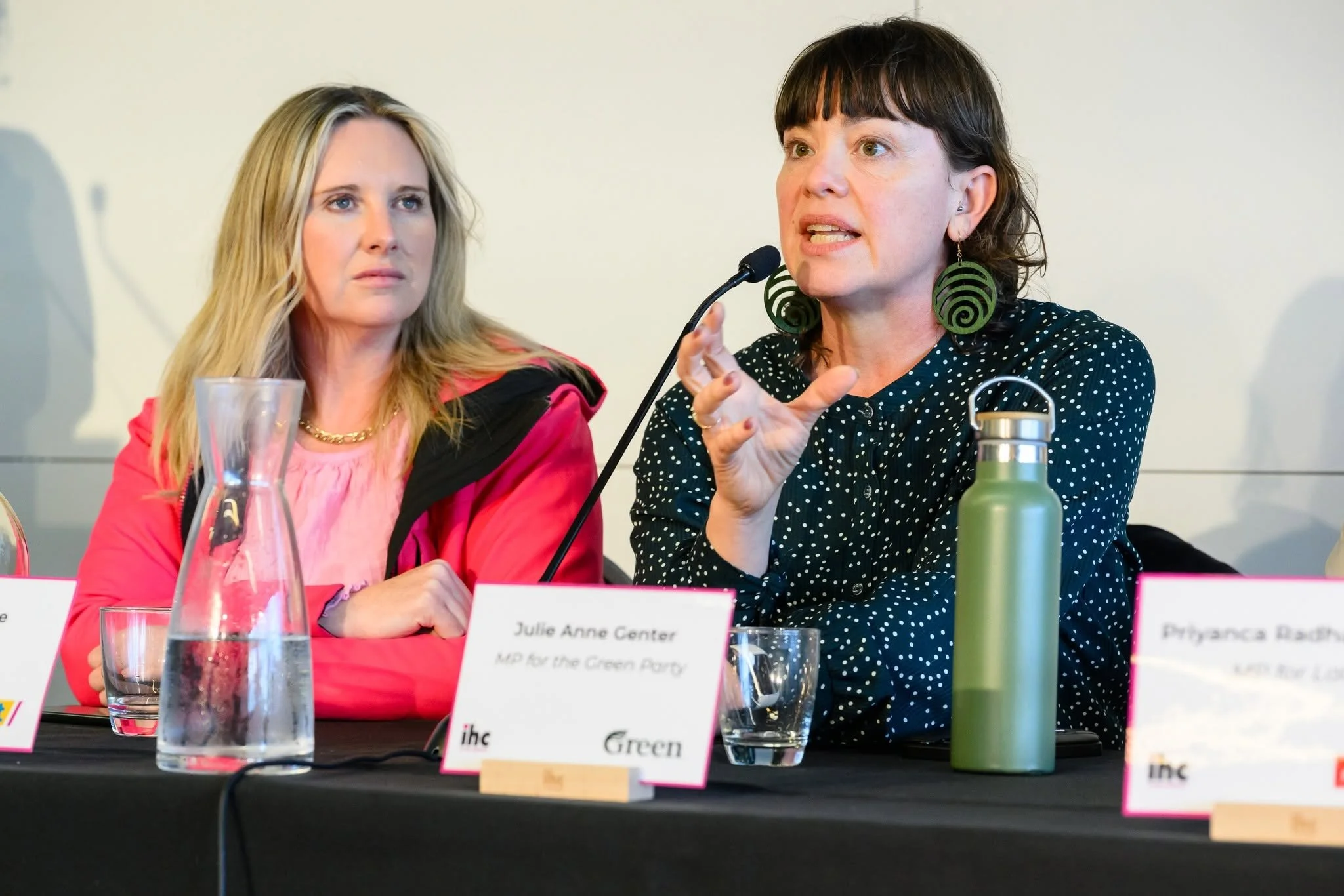
Credit Mark Coote Photographer
Genter for the Greens said that despite what some of the other candidates had said, that “money isn’t tight, it’s been a political choice to let richest people pay a lower effective tax rate than workers”. The Greens would introduce accessibility rights and a benefit system that meets benefit costs, as well as addressing the ‘love tax’ where disabled people are penalised by entering into a relationship and having their benefits impacted.
Last but certainly not least, was Nakhle who said that the Government had had to ‘stabilise the system’ and there had been significant issues under several governments – National had simply been the one to work to fix them. She then took a somewhat questionable turn and said that walking into the forum was like walking into a room of lions because disabled people don’t tend to like National… she then compared disabled people to lions because “you wake up and fight everyday”. Moving on from the disabled people are lions analogy, Nahke pointed to the $2B increase in disability funding; Ferguson then raised a point of clarification that the $2B increase wasn’t really an increase, it was a historic underspend and it was a bit misleading to frame it as a budget increase. I don’t think Nakhle was very familiar with the minutiae of the 2026 Budget breakdown because she didn’t seem to have much of an answer after that, though she did say overall that no, National would not be committing to the 6-month discussion to increase social security.
Question three certainly got more heated than previous questions, with the Labour and Greens candidates becoming more frustrated and animated with the coalition candidates’ answers.
Question four
Onto question four and the homestretch. This question was looking at accessible and affordable transport:
Transport for many disabled people is essential for their inclusion in society, education, employment, maintaining autonomy, and meeting New Zealand's obligations under the UNCRPD (United Nations Committee for the rights of People with Disabilities).
Will you work with the Minister for Transport and negotiate with the disability community, within 6 months of taking office, on strengthening the Total Mobility scheme to reduce travel costs for disabled people -- including in regional New Zealand?
Marcroft was first to answer and said that yes, NZ First was keen progress accessible transport and would talk to councils who have partial responsibility for funding. McClure said that ACT couldn’t promise anything within six months, but that they wanted to see ‘major movement within this space, especially for people with health conditions like cancer who are already struggling in this space’. She was keen to get stakeholders involved around the table to discuss future steps.
Radhakrishnan said yes and would prioritise funding. She also pointed out that under the current government, the contribution to Total Mobility (TM) had been reduced back to 50% instead of the 75% that it was under Labour. Labour believes that reducing the subsidy has negatively affected disabled people’s ability to travel easily, and that disabled people are now having to pay more which in turn limits movement and community participation.
Nahke for National said no to changing TM, pointing to the review that was undertaken in 2024. She acknowledged how important TM is, and how she thinks about “how the disability community gets around whenever I get into my car everyday”. National believes that to improve TM, that they need to grow the economy before they will be able to improve the scheme, though they do recognise the importance of TM.
Wong for TOP said that the party was against cutting government contributions to TM, and that they had a policy of free public transport for all. This policy would directly benefit the disability community, and she said that cost modelling must look at the social cost of not providing assistance. Genter said that the Greens would put the TM subsidy back to 75% and that their policies would also make public transport much more accessible. The Greens have already undertaken some consultation with the disability community to inform their policies, and would use Community Services and Total Mobility cards as concession cards for free public transport.
So, for question four, all the parties recognise the importance of the Total Mobility Scheme, but parties disagree on what the best course of action is.
Audience questions
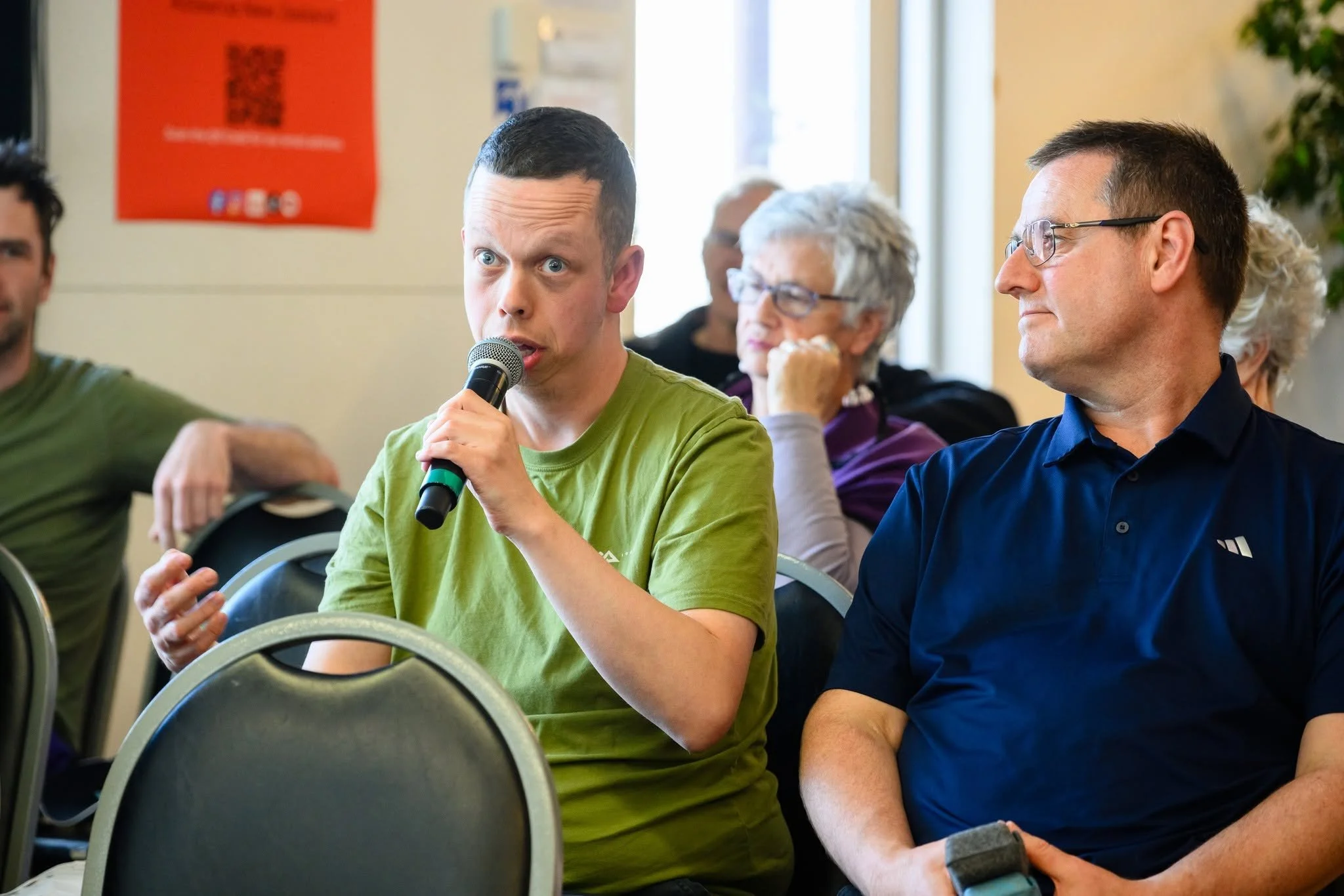
Credit Mark Coote Photographer
Finally we were onto the audience questions. For a question about folding in Whaikaha with MSD or having it as a standalone ministry, ACT supports folded in, TOP and the Greens support standalone, NZ First supports standalone with the caveat of that may change in the future. National didn’t have a yes or no, and Labour (who established Whaikaha) would leave it as a standalone ministry but shore up funding and resourcing to better equip the ministry.
A few audience questions later and we hit on one that got heated from all sides of the candidates table; the question was asking about pay equity for DSS staff. At first it seemed to be going smoothly, with McClure and Marcroft saying they supported the current legislation and it had been a part of the coalition agreement. Wong said that TOP would restore pay equity legislation.
Nahke from National said that the Government was really proud of the $2B pay equity package that was delivered to care and support workers in 2017, and that the “reality is that the Government doesn’t have an endless supply of money”. Genter (who at this point was burying her face in her hands) said that “the coalition are in a cult with talking points that don’t match up to their track record or policies”. Radhakrishnan came out swinging at the coalition for how Pay Equity was done; criticising how it was pushed through under urgency to “save the budget”, and that Labour would be funding future Pay Equity claims by “making better political choices”. Nakhle interjected saying that National don’t “view disabled people as burdens and aren’t only gems in their parents eyes”… and that she “doesn’t have children, but I see you all as my children”. She also defended the cuts to Pay Equity funding.
Note at this point in the forum, both Genter and Radhakrishnan looked completely fed up and utterly frustrated. I was a tad concerned about some of the language that Nakhle was using throughout the forum, and feel like National could do with a bit of a refresher course on disability discourse; the comments comparing disabled people to lions, that we aren’t just gems in our parents eyes, and how we are all her children felt particularly condescending.
Final thoughts
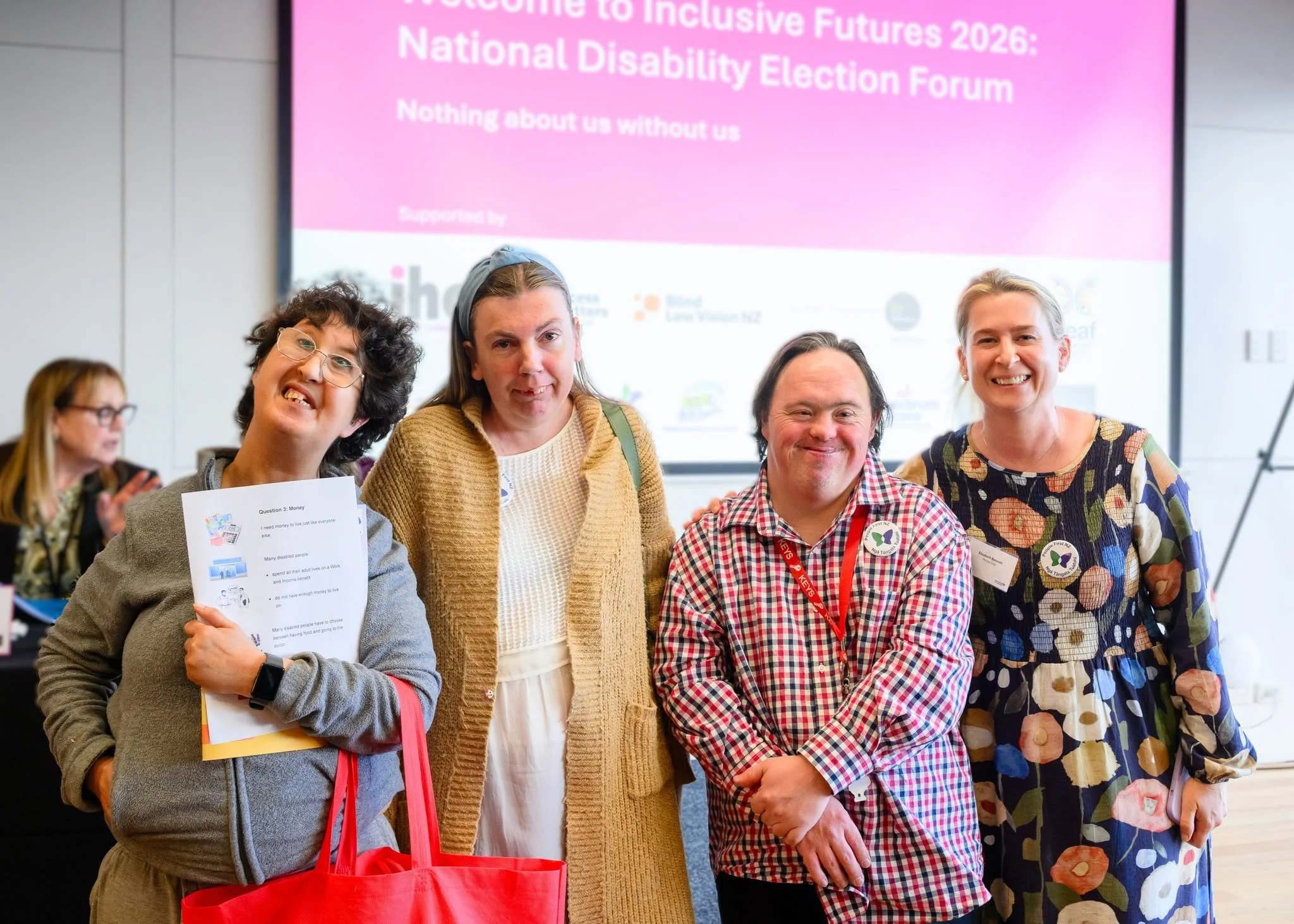
Credit Mark Coote Photographer
And after two and a bit hours we were done! Overall it was a really good event and I think it was a great opportunity for disabled people to share their views with the people who are going to be representing us.
It’s important that disabled peoples’ voices are heard and our needs are met. To do this, we have to make sure that our MPs understand that every policy is a disability policy, and we can’t just be something to consider once in a while on a checklist.
Regardless of who you support or vote for, I strongly encourage you to get involved, be it online or in person, or even having a chat over family tea.
On 7 November we go to the polls – you MUST enrol to vote by Sunday 25 October, and you don’t need to bring ID with you. Democracy only works if we hear from everyone. Your voice is important, make sure you use it.