
On the Coast: how the job changed Tim, one catch-up at a time
Until a couple of years ago, Tim had spent most of his working life as a labourer. Patience was not his strong suit, by his own account. Today he is a Support Worker with CCS Disability Action in Westport, and he says the mahi has changed him.
"Going into the job, I had very little patience and empathy," he says. After a year in the role, things have shifted. "I've settled down a bit and been more patient and understanding. It's been a positive for me as well."
Tim joined CCS Disability Action through a return-to-work programme. Three times a week, on the windswept coast of Westport, he meets 24-year-old Blake. They lift weights, ride bikes, swap banter, and talk about life. It is a work relationship, yes – but it is also something more.
What the job actually looks like
No two sessions are the same. Tim shapes each one around Blake's energy and mood – workouts, time at the beach, grocery runs. Some days are easier than others.
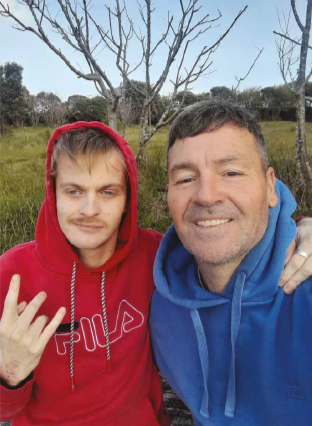
Blake (left) and Tim (right)
"Some days he can be a real handful," Tim says with a wry laugh. He knows Blake's impairment can be tough to navigate. "Some days are good, some days are tough for him."
Blake lives on a farm just outside town with his family, uses crutches for mobility, and is working hard to build strength and breathe easier. Much of Tim's role is turning up, reading the day, and backing Blake to push himself.
"I promote health and fitness, healthy eating, and I try to motivate him to do other things," Tim says. "I always ask him if there's anything else he wants to achieve. I think it's been great for him to have another man in his life."
Tim looks past their time together too. He would like to see more opportunities for para-athletes on the Coast. "It's kind of a shame," he says. "I think Blake would do well in weightlifting."
Building trust, not just fitness
Early on, Tim made it clear their time together was a safe space.
"Tim said, 'Mate, you can say what you want with me. If you want to talk about stuff, you can,'" Blake explains.
That trust has grown into a genuine connection, built on shared interests, humour, and mutual respect.
"He's a nice fella," Blake says. "We have some laughs, and we just get along really well." He adds simply: "He understands where I'm coming from."
Blake finds it easier to keep going with someone alongside him. "I tend to push myself a bit more when I'm with someone," he says. On his custom three-wheeled bike, adapted by his grandfather, the two of them ride footpaths, roads, and off-road trails when the weather allows. "Anywhere and everywhere," Blake says. Tim is even helping him learn to drive, on the beach.
For Tim, none of this feels routine. "It almost feels like not work some days," he says. "Blake's got a lot of heart – more than a lot of guys I know who are non-disabled."
Seeing the change
A few years in, Tim can see the difference in Blake.
"When we first met, he was quite withdrawn," he says. "He just seems a lot happier now."
Blake is focused on the here and now – building fitness, helping care for his younger siblings, and enjoying the quiet of farm life. "I'm just focusing on myself at the moment," he says.
Tim keeps his own goal simple.
"For those two hours, if I can make him feel like he's number one… that's what matters."