
What a packed UC event taught me about dyslexic thinking
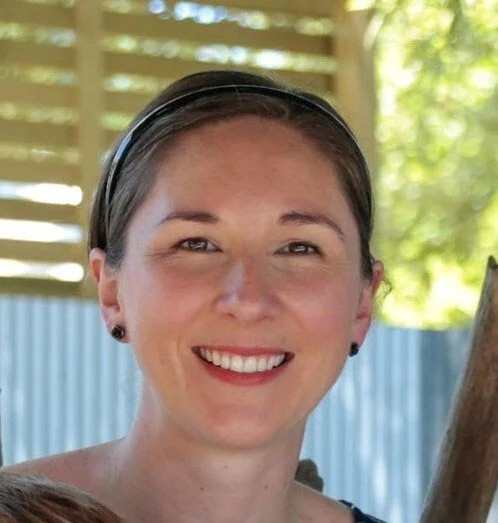
Carmen Curtis
By Carmen Curtis, National Service Policy Coordinator, CCS Disability Action
Published 29 June 2026
I left the University of Canterbury last week thinking about solar panels.
That image came from Graham Grant, one of four panellists at the UC Business School's latest Thought Leadership event, Dyslexic Thinking: An Untapped Strategic Advantage for Modern Business? People with dyslexia, he said, are like brilliant solar panels that just happen to be unable to connect to the system, because the system was built for a different voltage.
It was encouraging to see a big academic institution and its business and research community give these ideas a public platform.
A panel led by lived experience
What gave the most weight to the evening was who was doing the talking. Three of the four panellists were business leaders with dyslexia, or "dyslexic thinkers", a term they used to keep the focus on different ways of thinking rather than on deficit. This was leadership from lived experience, not just theory.
The panel was tied to a new UC research project on the connection between dyslexia and innovation, funded by Canterbury company Seequent, now part of Bentley. As co-founder of Unlock Innovation Dorenda Britten put it, "New Zealand has no data on this. We are generating it."
A lot of people, a lot of strengths
We do not gather statistics on dyslexia specifically in New Zealand. More conservative estimates put it at about 10 percent of the population, the figure used by the Dyslexia Foundation of New Zealand. Global estimates run higher, up to 20 percent. Twenty percent, or 1 in 5, was the figure the panel used. Either way, we are talking about a lot of people, with strengths and abilities we too often turn away at the workplace door.
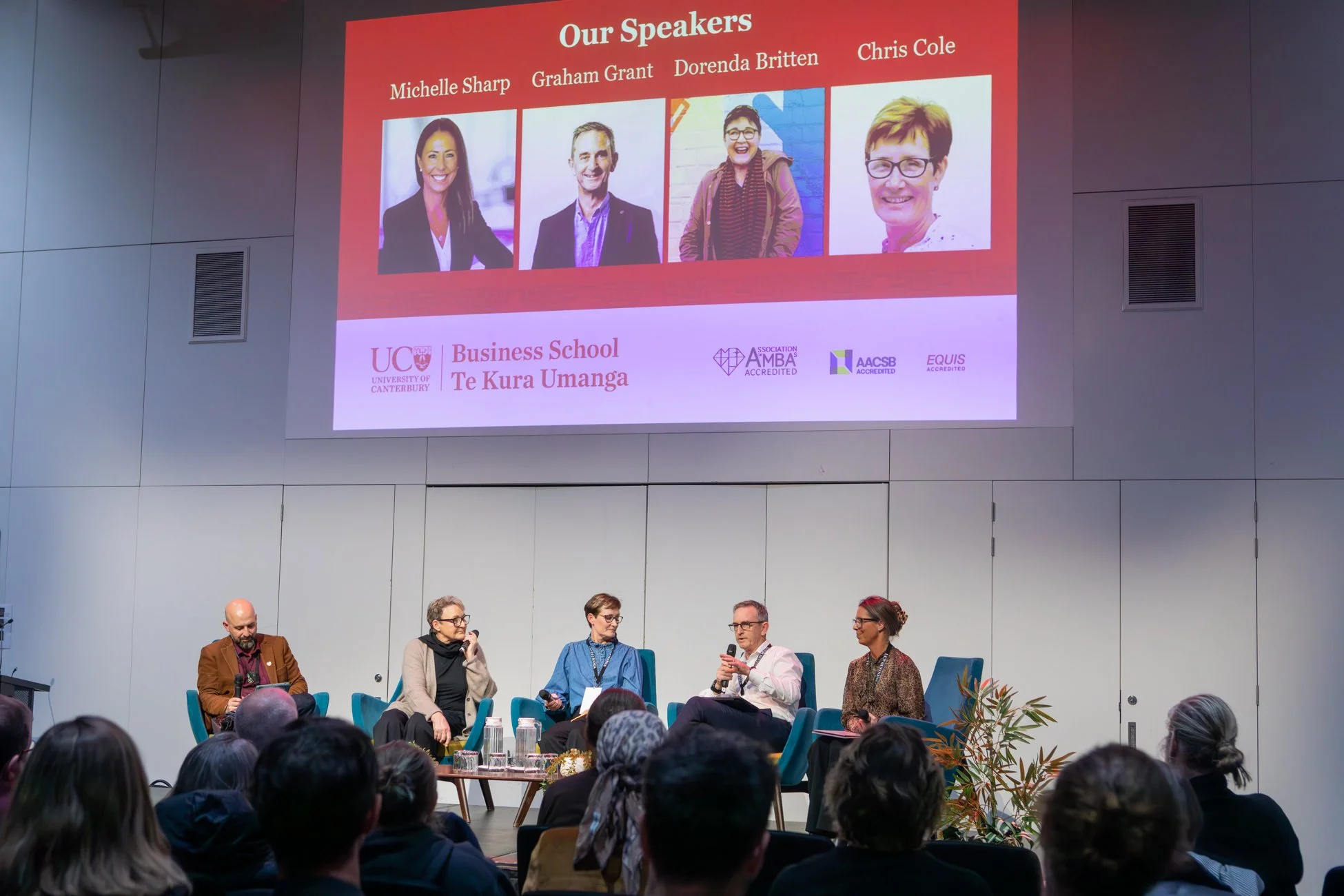
The panel. Photo credit: University of Canterbury
The panel was honest about why. We have a systems issue, the education system in particular. Every person with dyslexia is different, but there is also a consistency in their strengths: things like pattern recognition, big-picture thinking, empathy. These are some of the strengths that drive innovation and productivity.
This is where the solar panel image does its work. How are we so bad at seeing the value in people who think differently to those who are neurotypical? We then disable a fair portion of the population by designing learning and work for one kind of thinker and not another.
Our national measure of disability, which gives the 1-in-6 figure of who is counted as disabled (Stats NZ), uses a high threshold and would not include most people with dyslexia. But under the social and human rights models of disability, we can still recognise that what we are doing to these people is, in effect, disabling them. Wrong voltage, as Graham would say.
When the case for inclusion is also the case for business
At an organisation like ours, built around human rights, it can be almost jarring to hear the same call to action arrive through the language of business productivity. But I love that the two go hand in hand. We are all better off when we stop shutting a portion of our population out of contributing and leading. And it is a powerful argument for businesses.
Panellist Michelle Sharp made the point clearly. This is not just about being inclusive, she said. We actually need these brains for progress and innovation.
A key takeaway was that coming together matters most. Not one type of thinker as the hero, but all of them, bringing different strengths and questioning each other's assumptions. Graham Grant suggested that deliberately designing for maximum variety in cognition makes for the highest-performing teams.
My highlight, and the question I never got to ask
My highlight was a corrective moment. When audience questions drifted into deficit thinking, Graham, the panellist who identified as neurotypical, spoke up. As a business leader and ally, he reminded the room that this was missing the whole point. The evening was not about how people with dyslexia manage the things they find hard. It was about waking up to the strengths different thinkers bring, and making sure that happens. I loved that.
The room was packed, with far more good questions submitted than the panel could answer. I had one of my own in mind and never got to ask it, which was a great problem to have. It is a sign the demand is there for new ways of doing business that use all of our strengths and all of our brains.
If I had been able to ask, it would have been to explore the employer and industry role in removing barriers to getting into a job in the first place. Many people with dyslexia (and of course, other neurodivergence) have already been disadvantaged by our education system before they even reach the working world. They are more likely to have left school early and less likely to hold the formal qualifications an employer expects. The system problem is huge, and it will take time. So what might change look like in the meantime?
This is a space where we aim to put our values into action at CCS Disability Action, too. We’re always learning and growing in this area ourselves, and I hope that never stops. But when I look around at my incredible colleagues and all they bring to the mahi, I’m so glad we see lived experience as a valid qualification for our work, and that we’re committed to working with each other’s strengths. We are so enriched by our diverse staff. We’re seeing pockets of innovation all around the motu – new kaupapa, new support services, and teams tackling barriers together to deliver local solutions.
I would love to see a follow-up event where current and future business leaders could start working through the "how" of building these workplaces.
And that is the whakaaro I left with: What might the working world look like if we were ready to welcome all kinds of thinkers – to connect all these amazing solar panels in – so everyone had the opportunity to shape our future?
Carmen Curtis is National Service Policy Coordinator at CCS Disability Action and attended the UC Business School event.
About CCS Disability Action
CCS Disability Action is the largest pan-disability support and advocacy organisation in Aotearoa New Zealand.
We support people with all types of impairments and have been working alongside disabled people since 1935.
We are at the forefront of service provision, advocacy and information sharing in the disability sector. We partner with disabled people, their families and whānau to enable them to have choice and control in their lives. Our vision is to see every disabled person and whānau hauā interwoven into the lives of their whānau and community.